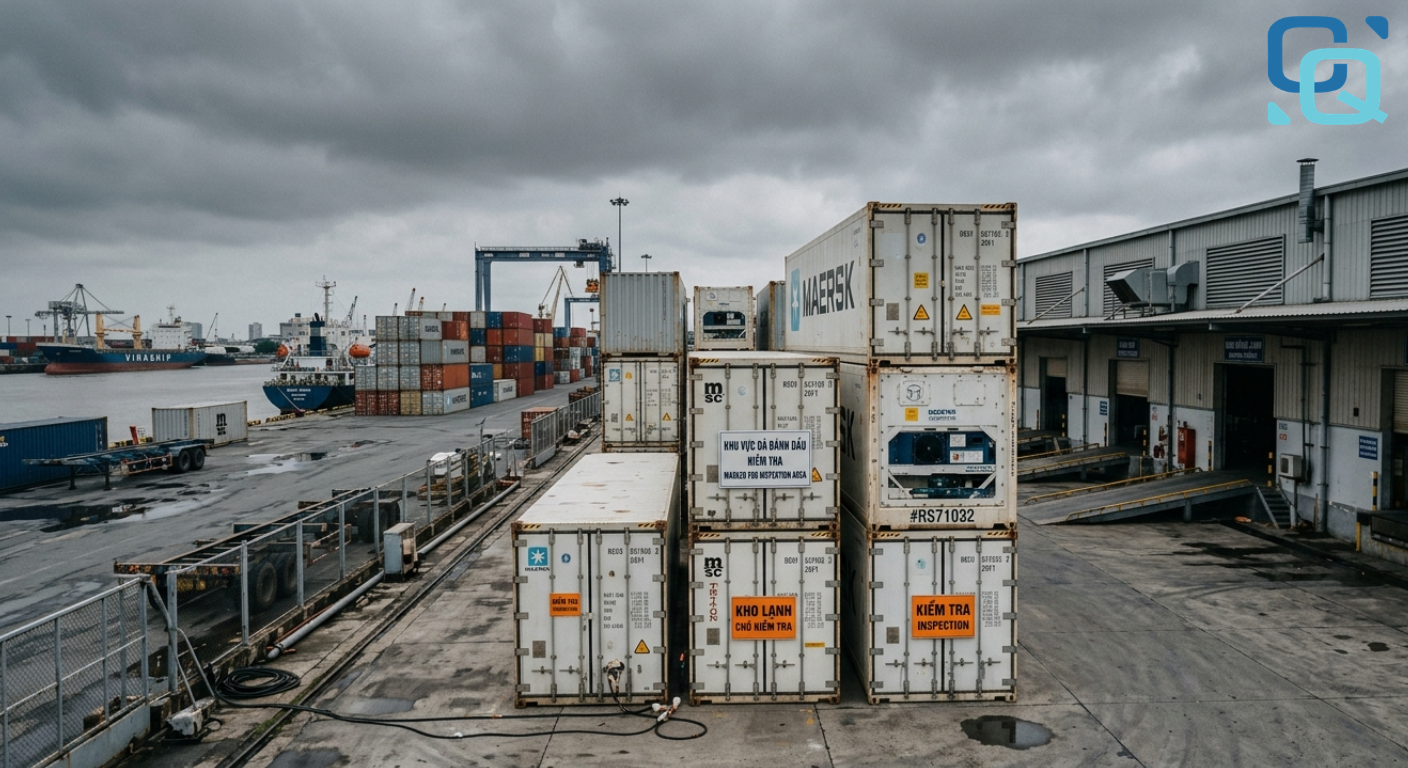
In the context of Vietnam's deep integration with the global supply chain, procedure handling when goods do not meet food hygiene and safety standards is becoming the biggest worry of food importing businesses, agricultural products and raw materials. Only one batch was contaminated, Excess pesticide residue or harmful organisms can cause the entire shipment to be stuck at the port, generating hundreds of millions of dong in storage costs and even losing a large contract.
Logistics power – a pioneer in full-package import services – has supported thousands of businesses to quickly overcome situations of "not meeting food hygiene and safety standards"., Optimize costs and strictly comply with the law. This article will provide the full legal framework, quarantine process on the National Single Window Information Portal (VNSW) and especially 4 practical handling scenarios when goods do not meet food hygiene and safety standards.
Article Content
- 1 Regulatory legal framework – Solid foundation for all decisions
- 2 Quarantine registration process on VNSW – From A to Z in just 48 hours
- 3 Handling when goods do not meet Food Hygiene and Safety standards - 4 real scenarios that businesses need to know
- 4 Why should you choose Cuong Quoc Logistics to handle goods that do not meet food hygiene and safety standards??
- 5 Conclude
Regulatory legal framework – Solid foundation for all decisions
Before performing any procedure, Importing businesses must clearly understand the following 4 "backbone" documents:
- Decree 85/2019/ND-CP: Detailed regulations on the National Single Window (VNSW) – platform to digitize all quarantine records.
- Decree 15/2018/ND-CP: Core document of the Food Safety Law, Clearly stipulate the responsibilities of businesses when goods do not meet food hygiene and safety standards.
- Circular 11/2021/TT-BNNPTNT: The list of goods subject to specialized inspection belongs to the Ministry of Agriculture & Rural Development.
- Veterinary Law 2015 and Law on Plant Protection and Quarantine 2013: Specify specific technical standards for each animal product, plant.
Logistics power Always update any changes immediately, supplement of the above documents to provide free consultation to customers right from the stage of signing the import contract.
Quarantine registration process on VNSW – From A to Z in just 48 hours
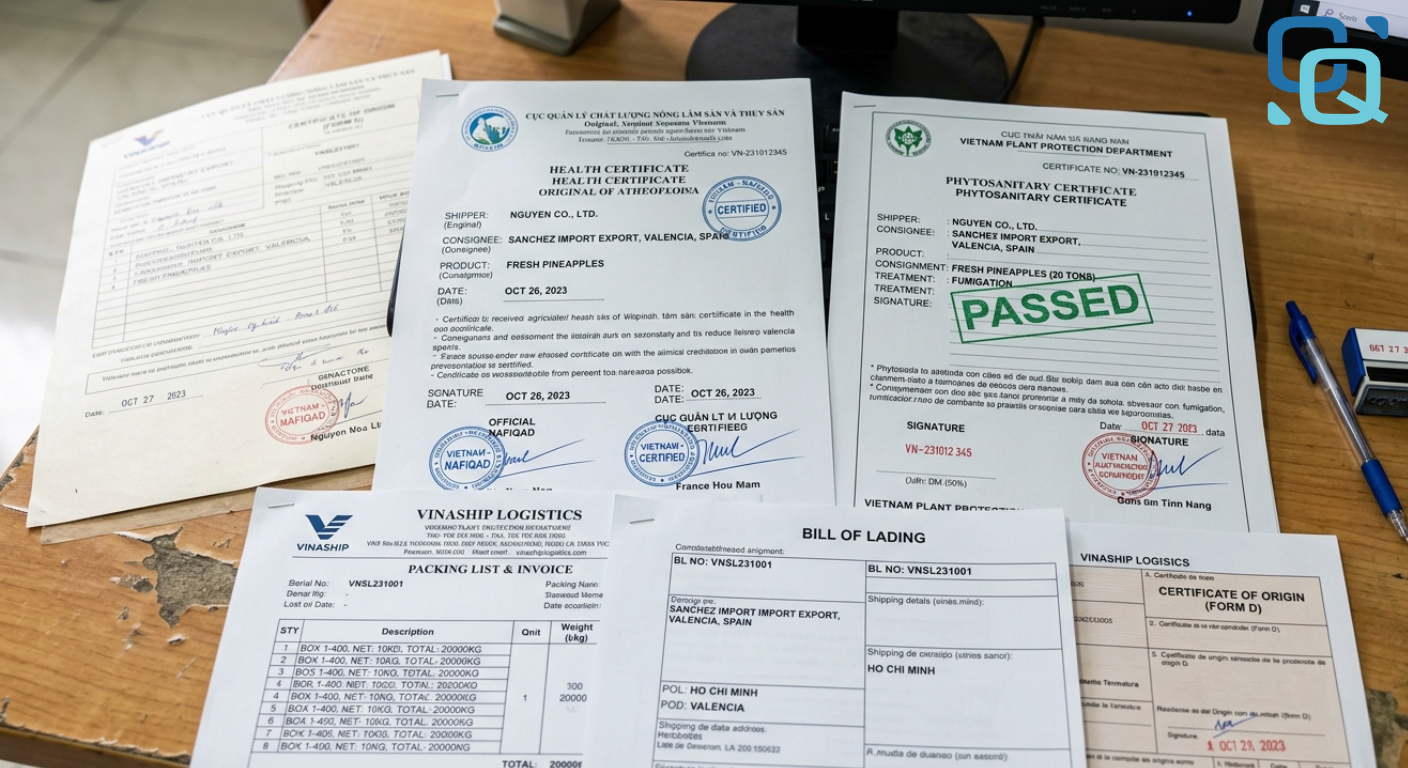
Step 1: Prepare electronic records (e-Documents) Businesses need high-quality scanning of mandatory documents:
- Quarantine certificate (Phytosanitary Certificate / Health Certificate) issued by the exporting country agency.
- Commercial contract, Commercial Invoice, Packing List.
- Special import license (if it is a living animal, seed plants, or goods on the prohibited/controlled list).
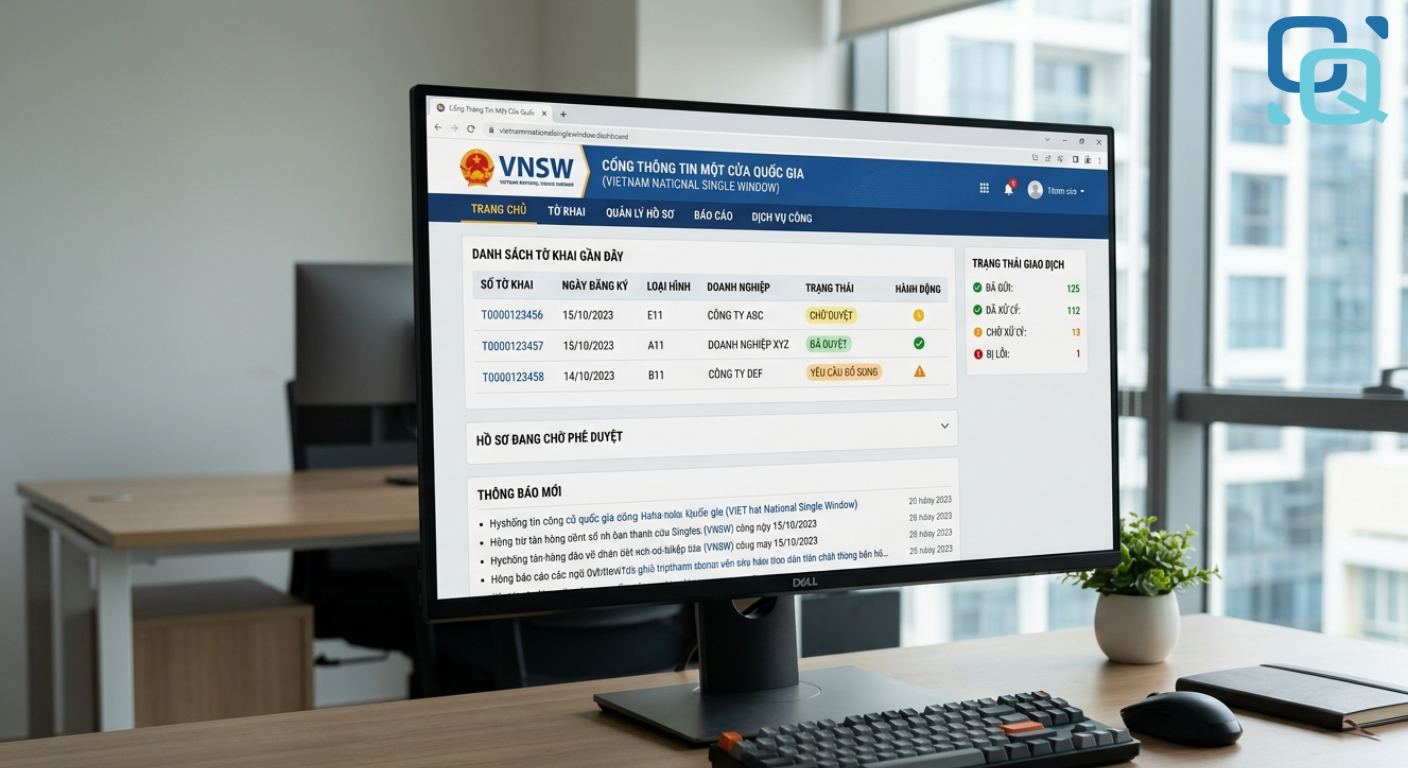
Step 2: Declare and submit documents on vnsw.gov.vn
- Log in to your business account that has been issued a VNSW code.
- Select the module "Ministry of Agriculture and Rural Development".
- Choose the right procedure: “Imported plant quarantine” or “Animal quarantine & imported animal products”.
- Fill out all information in the form, Attach the file and sign the CA number (digital signature) before sending.
Step 3: Receiving – Sampling – Bringing goods to the warehouse The quarantine agency will respond within 1–3 business days. If the profile is valid, Officials will coordinate to take samples at Cat Lai port, Tan Cang or bonded warehouse. Enterprises are granted a "Temporary certificate of quarantine results" to bring goods to cold storage, Avoid damage while waiting for test results.
With experience handling more than 2,500 documents/year, team Logistics power can assist customers in completing this entire process in just 24–48 hours, Minimize port inventory risks.
Handling when goods do not meet Food Hygiene and Safety standards - 4 real scenarios that businesses need to know
This is the most important part to help businesses avoid losing billions of dong. When the test result is “Fail”, The quarantine agency will send an official notice to VNSW. Common errors: Salmonella, E.coli exceeds the threshold, pesticide residue, mold, weevil, harmful organisms…
Theo Article 55 of Decree 15/2018/ND-CP, Enterprises have 4 official processing scenarios:
Scenario 1: Recycle (Re-processing) Applicable when errors can be corrected (surface infection, wrong label, Slight excess humidity).
- Enterprises coordinate with standard recycling factories (heat treatment, ozone disinfection…).
- The entire process must be directly supervised and tested a second time by the quarantine agency.
- Logistics power successfully supported 47 pepper import shipments, ginger, onions using this method, Save 65% of costs compared to re-export.
Scenario 2: Change the intended use The goods do not meet human food standards but still meet standards for use as animal feed or organic fertilizer.
- Must request confirmation from the Department of Animal Health or Department of Plant Protection.
- This is a "lifesaver" solution for batches of agricultural products slightly infected with mold.
Scenario 3: Re-export (Re-export) – The most popular and optimal solution Goods must be returned to the exporting country within the prescribed time limit.
- Logistics power owns an international logistics partner network in more than 40 countries, Helps customers complete re-export procedures in just 7–10 days, Save up to 40% on round-trip transportation costs thanks to long-term framework contracts.
- All storage costs, transport, Re-export quarantine is optimized and transparent by our team in detailed reports.
Scenario 4: Destruction (Destruction) Applicable when the shipment poses a serious disease risk (African swine fever, Bacteria cause mass poisoning) or cannot be re-exported.
- Enterprises bear all destruction costs as prescribed in Circular 33/2014/TT-BNNPTNT.
- Logistics power Coordinate with licensed destruction units, Ensure environmental safety procedures and have complete handover records for businesses to refund import tax.
- Summary table of incident handling procedures when goods do not meet food hygiene and safety standards
| Situation | Applicable documents | Proposed solution from Cuong Quoc Logistics | Estimated time |
| Misinformation Health Cert | Decree 15/2018/ND-CP | Please request amendments/additions from the exporting country before sampling | 2–3 days |
| Detect harmful organisms (plant) | Law on Plant Quarantine | Steam disinfection (Fumigation) + check again | 5–7 days |
| Bacterial Contamination / Chemical Residues | Food Safety Law + Decree 15/2018 | Re-export or destroy according to the decision of the Management Ministry | 7–14 days |
| The label is wrong to Vietnamese standards | Circular 11/2021/TT-BNNPTNT | Relabeling at bonded warehouse + additional testing | 3–5 days |
Why should you choose Cuong Quoc Logistics to handle goods that do not meet food hygiene and safety standards??
- Team of senior quarantine experts: More than 15 years of experience, Used to work at the Department of Animal Health and the Department of Plant Protection.
- Internal VNSW system: We connect directly to the national one-stop system, Reduce response time by 50%.
- Cargo risk insurance: Support all costs incurred if customers follow the process we advise.
- Global network: Close cooperation with major shipping lines (Maersk, MSC, CMA CGM) and forwarder in 40+ countries for quick re-export.
- Transparent reporting 24/7: Customers track actual progress through their own app and receive daily reports.
Hundreds of import businesses in Ho Chi Minh City, Binh Duong, Dong Nai has trusted Logistics power to successfully handle shipments that "do not meet food hygiene and safety standards" without incurring administrative penalties or losing long-term contracts..
Conclude
Handling when goods do not meet food hygiene and safety standards It is not the "death" of the shipment if the business acts legally and quickly. Understanding the VNSW process, Understanding the 4 processing scenarios and choosing the right specialized logistics partner will help you transform risks into opportunities.
Cuong Quoc Freight Forwarding Company Limited
Office: 7th floor, Parami Building, 140 Bach Dang, Tan Son Hoa Ward, Ho Chi Minh City
Hotline: 0972 66 71 66
Email: info@cql.com.vn
Website: https://cql.com.vn/

See more at