During implementation import gift goods, Businesses need to comply with strict legal regulations to ensure procedures take place smoothly and legally. Below are detailed instructions on the steps, Necessary documents and procedures to carry out procedures for importing gift goods, with support from Logistics power – a reputable unit in the field of logistics and international transportation.
Article Content
What are gift items?? Legal regulations
According to the provisions of the Customs Law, Decree 08/2015/ND-CP and Decree 59/2018/ND-CP, gift goods are understood as items sent as gifts for non-commercial purposes, to express feelings, gratitude or personal purpose. Cases that are considered valid gifts include::
- Gifts between partners and businesses, to promote cooperation or customer appreciation.
- Donation between parent company and subsidiary company, within the scope of business activities.
- Give to customers, partner, staff, for promotional purposes or customer appreciation.
These types of gifts must comply with import regulations, especially about paperwork, tax and physical inspection.
Policy on management of import of gift goods
Umbrella gift goods Not subject to import ban, But businesses still need to pay attention:
- Some items such as cosmetics, alcohol, food, Medical equipment... may require an appropriate import license before proceeding.
- These items must comply with the management regulations of Decree 69/2018/ND-CP on management of import and export goods.
- Customs procedures according to Circular 38/2015/TT-BTC and 39/2018/TT-BTC clearly stipulate the steps, records and inspection procedures.
Understanding policies helps businesses avoid risks and minimize related costs when importing gift goods.
File, Documents need to be prepared when importing gift goods
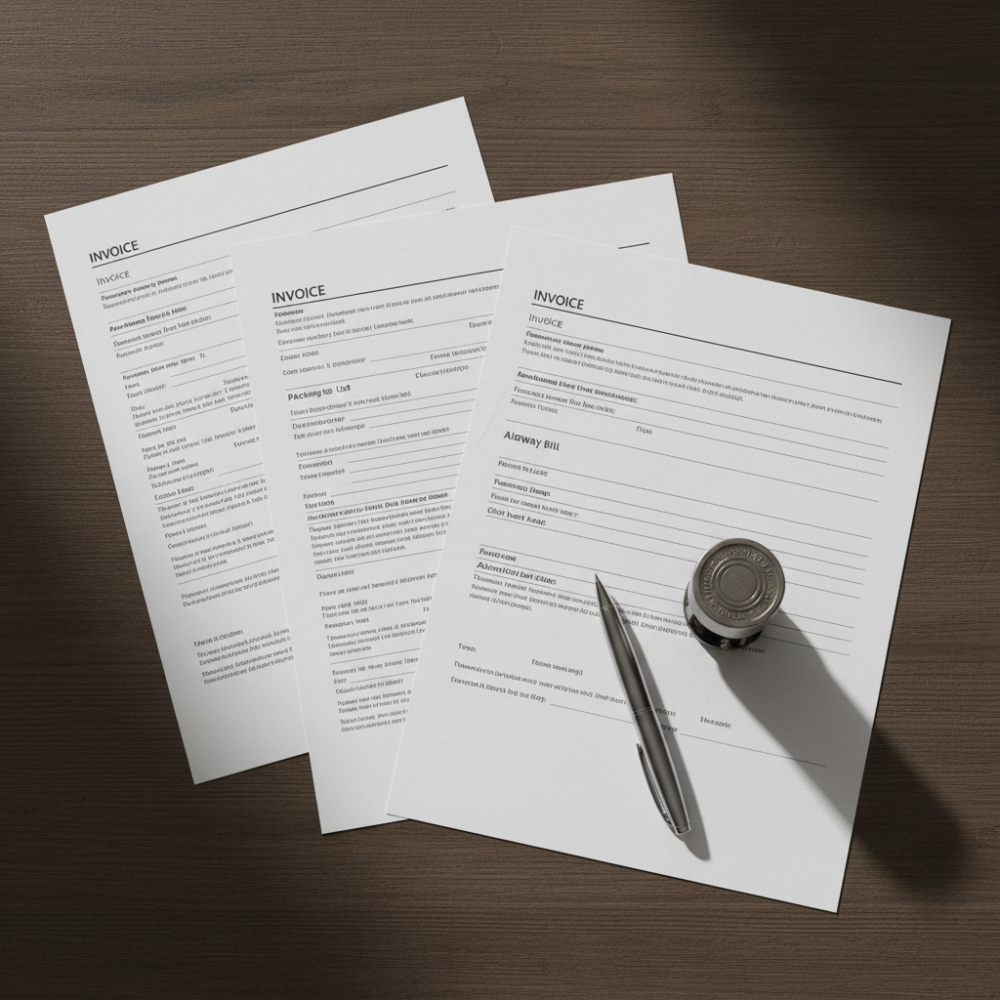
To ensure the procedure for importing gift goods goes smoothly, Businesses need to prepare complete documents, following documents:
- Donation contract or Confirmation letter (Gift Letter) clearly express the purpose, value and sender, receiver.
- Commercial Invoice – commercial invoice, in which the declared value must reflect the actual value of the goods, including gift value.
- Packing List – packing list, detailed description of the goods.
- Bill of lading (Bill of Lading or AWB) – shipping documents.
- Specialized license (If the item is subject to special management).
- Catalog or COA (if requested by customs).
- Value declaration (if applicable).
Fully preparing these documents not only helps the inspection process go smoothly, but also minimizes the risk of goods being held or tax being assessed higher than reality..
Follow the instructions above, Businesses can clearly define the steps, Prepare documents according to regulations, from there do it import gift goods accurately and legally. Logistics power Ready to accompany customers in every step of the process, ensure import procedures take place quickly, favorable, Save time and cost.

Procedures for importing gift goods
In process import gift goods, Correct implementation of procedures is a key factor to ensure goods are cleared quickly, legally and avoid risks arising during the import process. Below are the main steps in Procedures for importing gift goods that businesses need to understand to best prepare when implementing this activity.
Steps to check and prepare documents
Before starting Procedures for importing gift goods, Enterprises need to take steps to check and prepare complete documents, accurately to avoid errors that cause delays or unexpected costs.
- Identify items: Check to see if the gift item is under special management, Do I need to apply for a license or certificate of conformity?.
- Collect necessary documents:
- Gift contract or confirmation letter (Gift Letter): Specify sender information, receiver, value, donation purpose.
- Commercial Invoice: Declare the actual value of the goods, Ensure correctness and consistency with the value in the Gift Letter.
- Packing List: Packing list, Detailed goods description.
- Bill of lading (Bill of Lading or AWB): Documents for transporting goods.
- Specialized license (if any): For items subject to special management such as cosmetics, food, medical equipment…
- Catalog or COA (if required): Especially for goods with technical regulations or quality certification.
- Value declaration (if applicable): To accurately determine taxable value.
- Check the item: Make sure the item is not on the list of prohibited imports. If a license is required, Businesses must ask for permission before proceeding with the next steps.
Procedures for opening customs declarations and physical inspection
After preparing all documents, Enterprises will carry out customs declaration and physical inspection of goods:
- Open customs declaration:
- Use type code A42 for gift goods of the organization, business.
- Attach all electronic documents prepared as the contract, invoice, packing list, bill of lading, license (if any).
- Fill in the information about the item accurately, value, quantity, HS code complies with regulations.
- Check the actual goods:
- Customs authorities may conduct physical inspection of goods, based on risk level or product characteristics.
- Normally, Inspection rates can range from 5% to 50% of shipments.
- During the inspection, Goods will be verified for quality, quantity, label, consistent with the declaration dossier.
Pay taxes and clear gift goods
After completing the test, The business will take the final steps to get the goods cleared through customs:
- Pay import tax:
- Import taxes apply according to the MFN tariff or FTA agreements, if any.
- In addition to import tax, Businesses still have to pay VAT tax and special consumption tax (TTDB) (if the item is subject to tax such as alcohol, cigarette).
- Taxable price is based on market price, regardless of the purpose of the donation.
- Pay taxes and receive goods:
- When all taxes have been paid, Customs will issue a customs clearance permit.
- The business proceeds to pick up the goods, Count and transport to warehouse for distribution or use according to intended purposes.
Implementing this process correctly not only helps import gift goods favorable but also minimizes the risk of being fined, Maintain corporate reputation in import and export activities. Special, Have support from reputable logistics units such as Logistics power will help businesses save time, effort and ensuring procedures are carried out in accordance with the law.
Tax policy and common risks when importing gift goods
When performing the activity import gift goods, Businesses need to pay attention to relevant tax policies to ensure the customs clearance process goes smoothly, Avoid unwanted risks. In this section, We will dive into the applicable taxes, Common risks and advice from Logistics power to help businesses become more stable in the process of importing gift goods.
Taxes apply to gift items
In the process of importing gift goods, Businesses need to clearly understand the taxes they will have to pay to correctly determine their financial obligations, Avoid fines or incorrect tax assessments. The main taxes include:
- Import tax: Applicable according to MFN tariff (Most Favored Nation) or free trade agreements (FTA) signed. This tax is based on the actual value of the goods at the time of import.
- VAT (Added value): Calculated based on the value of goods plus import tax. VAT is usually at 10% in Vietnam.
- Special Consumption Tax (TTDB): Especially applicable to items such as alcohol, cigarette, high-end cosmetics, according to the provisions of law.
- Other fees: Includes quality inspection fee, licensing fee (If the item is subject to specialized management), storage fee, reality check.
Clearly identifying these taxes helps businesses be proactive in preparing finances and valid documents according to legal regulations..

Risks that businesses need to pay attention to
In process import gift goods, Businesses often encounter certain risks, can directly affect the customs clearance process and final costs. Some common risks include:
- Declare value too low: Many businesses deliberately understate the value of goods to reduce the amount of tax payable, However, if checked, Customs authorities can re-assign the actual value, leading to unexpectedly high tax amounts.
- Not preparing all valid documents: Like Gift Letter Incorrect model, Lack of specialized licenses or documents proving origin, causing goods to be delayed or refused customs clearance.
- HS code is not clearly defined: Wrong HS code leads to incorrect classification of goods, more susceptible to tax arrears or stricter inspection.
- Import personal goods but declare business type or vice versa: This causes legal problems, Tax risks and administrative sanctions.
- Lack of item policy inspection: Failure to update product management regulations may result in goods being retained or requiring additional licenses.
Advice from Logistics power to ensure convenient procedures
To limit the above risks, Logistics power It is recommended that businesses take the following steps:
- Check carefully the HS code Before importing to determine the correct tax and related regulations.
- Cooperate with a reputable logistics unit, like Logistics power, for accurate advice on product policies, procedures and necessary documents.
- Prepare complete and correct documents, especially Gift Letter, Specify sender information, receiver, value, The purpose of giving is to avoid rejection or re-inspection.
- Closely monitor the latest legal regulations on importing gift goods, to update licensing requirements, appropriate certification.
- Proactively prepare documents and declare the correct value to avoid the risk of tax assessment being higher than the actual value.

Complying with tax policies and related regulations not only helps businesses avoid fines, but also create favorable conditions for gift goods to be quickly cleared through customs, Minimize costs and legal risks.
In the context of increasingly strict import laws and policies, Support from professional logistics units such as Logistics power will be a key factor to help businesses operate effectively, Safe and sustainable in the field of importing gift goods.
Conclude
In this article, Logistics power presented in detail the process of importing gift goods in 2025, from the definition of gift goods according to legal regulations to import management policies, documents need to be prepared, procedure, and applicable taxes.
Gift goods are goods given for the purpose of goodwill between partners, business or individual, and are not subject to import ban, However, it is still necessary to comply with licensing regulations, Certificate of conformity and correct value declaration to avoid tax and legal risks. The process of importing gift goods includes steps to check the items, Prepare records, Open customs declaration, physical inspection and tax payment, Ensure compliance with regulations to avoid errors that could lead to fines or detention of goods.
Cuong Quoc Freight Forwarding Company Limited
Office: 7th floor, Parami Building, 140 Bach Dang, Tan Son Hoa Ward, Ho Chi Minh City
Hotline: 0972 66 71 66
Email: info@cql.com.vn
Website: https://cql.com.vn/

See more at