Article Content
- 0.1 Why is it important to comply with the law when importing?
- 0.2 Overview of the legal import process (7-step summary)
- 0.3 Before ordering: Steps to take to ensure legality
- 1 Necessary documents and documents when importing foreign goods
- 2 Customs clearance process and notes after goods arrive
- 3 Items that often encounter legal problems and how to handle them effectively
- 4 Conclude
Why is it important to comply with the law when importing?
During the process of **importing foreign goods**, Complying with legal regulations not only helps businesses avoid legal troubles, but also ensures the transportation process, Customs clearance of goods goes more smoothly and quickly. Legal importation helps avoid administrative sanctions, Maintain corporate reputation, At the same time, take advantage of tariff incentives under free trade agreements (FTA). Opposite, Violation of legal regulations may result in goods being detained, fine or forced destruction of goods, causing major financial and reputational damage.

Overview of the legal import process (7-step summary)
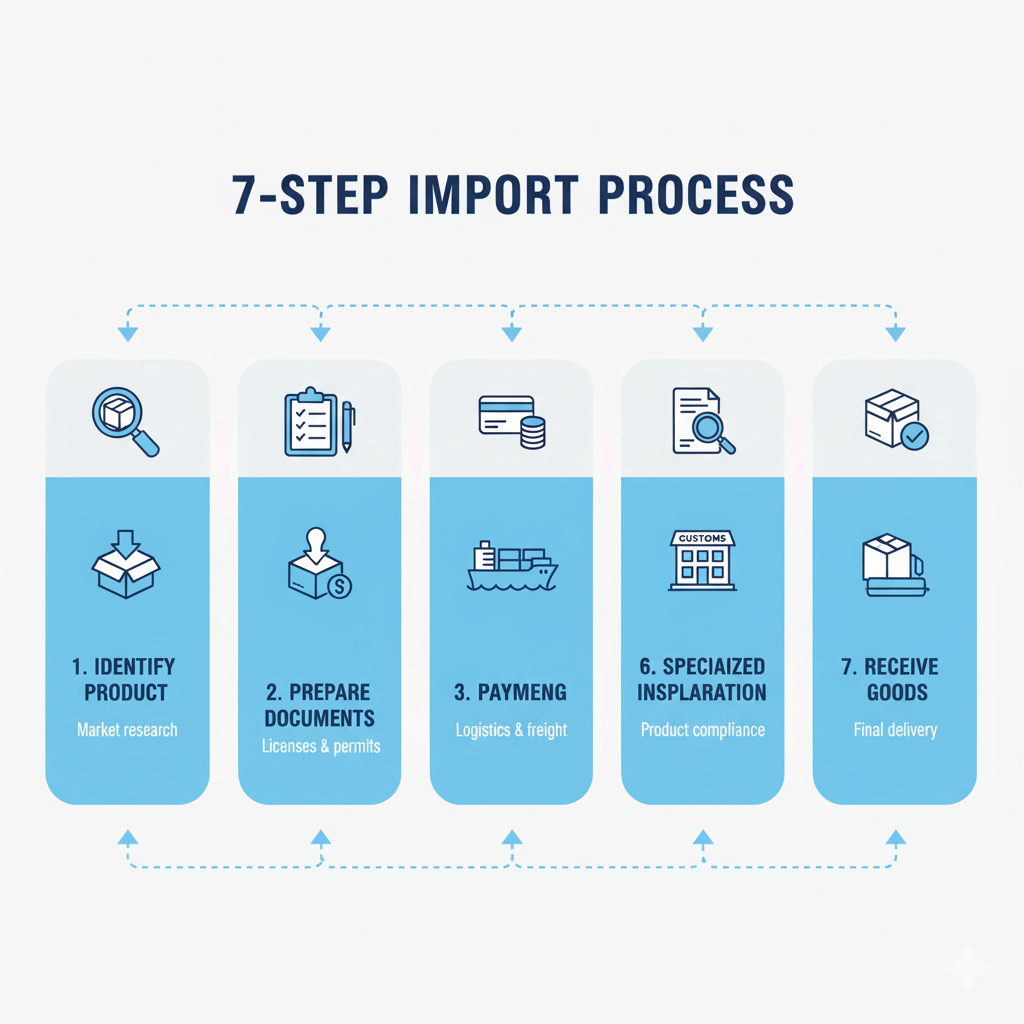
To **import foreign goods** legally, Businesses need to follow the following 7 main steps:
- Identify products and check industry regulations (Do you need a license?, quality certification, quarantine…)
- Prepare foreign trade contracts and related documents such as Commercial Invoice, Packing List, sales contract, C/O if necessary.
- Make payment and insurance according to the agreed method, Clearly define cost responsibilities based on Incoterms.
- Order shipping: train or plane booking, Check the estimated arrival and departure time of the transport vehicle (ETD/ETA).
- Proceed to make electronic customs declaration through VNACCS/VCIS system, Use the National Single Window to transmit specialized licenses.
- Carry out specialized inspection, quarantine or apply for a license if the item requires it.
- Receive goods at the port, Complete tax procedures, fee, and keep records according to regulations.
Before ordering: Steps to take to ensure legality
During the process of **importing foreign goods**, Businesses need to take careful preparations before placing an order to avoid legal risks:
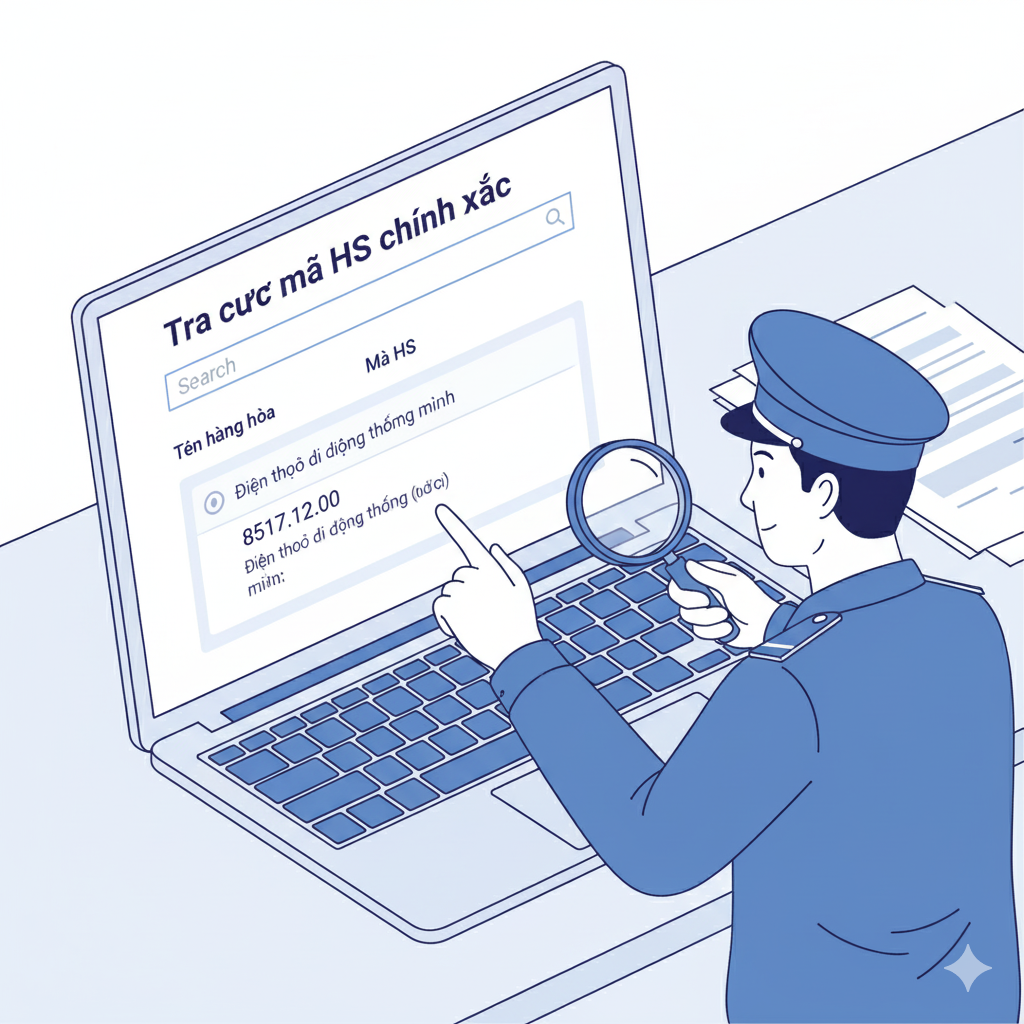
- Look up the exact HS code of the item to determine the appropriate tax rate and import procedures.
- Check relevant specialized laws such as medicine, food, cosmetics, chemical, electrical equipment... to determine whether the item requires an import license, circulation license or other specific certifications.
- Request necessary documents such as CO (C/O), quality certificate, Export license from the exporting country if required.
- Clearly agree in the contract on Incoterms terms to determine responsibility for costs, insurance, risks between the parties.
Full preparation of the above steps helps businesses ensure import foreign goods legally, Limit risks and optimize the customs clearance process, thereby saving time, costs and avoid unwanted legal issues.
See more: Project service
Necessary documents and documents when importing foreign goods
When proceeding import foreign goods, Preparing all types of documents and documents is a key factor to ensure the process goes smoothly, legally and avoid legal problems or delays in the customs clearance process. Below are the required documents and related documents that businesses need to prepare carefully before carrying out import procedures..
Required documents: Commercial Invoice, Packing List, Bill of Lading, C/O
In process import foreign goods, There are a number of required key documents that businesses need to have as a basis for customs declaration and proving the origin of goods.:
- Commercial Invoice (Commercial invoice): This is a document showing the value of the goods, Clear description of the product, quantity, unit price, total value, seller and buyer information. This invoice is the basis for determining taxable value and carrying out customs declaration procedures.
- Packing List (Packing slip): Detailed list of packages, quantity, weight, size of each package, Helps check goods upon receipt and serves as a basis for physical inspection.
- Bill of Lading (Bill of lading): Shipping documents issued by shipping lines or airlines, confirm that the goods have been transported from the place of export to the port of import. Can be original Bill of Lading or AWB (On Waybill).
- Documents proving origin (C/O – Certificate of Origin): Certificate of origin of goods, Help businesses enjoy tax incentives or fulfill commitments under the Free Trade Agreement (FTA).
Quality certification, Specialized licenses and other documents
In addition to the mandatory documents mentioned above, depending on item type, Businesses also need to prepare documents proving quality and specialized licenses to legalize the shipment:
- Quality certification (CQ): Issued by appropriate certification bodies, Helps confirm goods meet technical standards, safe, food hygiene or other international standards.
- Import license (If the item belongs to the specialized management group): Such as license from the Ministry of Health for medical equipment, Ministry of Agriculture for food, veterinary medicine, or the Ministry of Industry and Trade for specific goods.
- Other documents: Sales contract, authorization letter, technical catalog, Inspection certificate or related technical documents for inspection, Verify the quality and origin of goods.
Make customs declaration: procedures and important notes
After fully preparing all documents, next step in the process import foreign goods is to make a customs declaration to officially import goods into Vietnam. This process requires businesses or customs agents to perform the following steps:
- Submit electronic declaration via VNACCS/VCIS system: Use the National Single Window Portal system to transmit information about goods, related documents, Ensure data is accurate and complete.
- Check information: Information that needs to be checked includes HS code, taxable value, Delivery conditions according to Incoterms, bill of lading number, bale number, weight, and related licenses.
- Note about threading: The system divides goods according to green colors, Yellow, red to determine the test level, Enterprises need to prepare documents of reasons, Additional documents when subject to physical inspection.
- Choose the test type: Based on threading, Businesses need to prepare documents, Documents ready for comparison or physical inspection at ports or warehouses.
Understanding the types of necessary documents and documents helps businesses be proactive in the procedure process and minimize legal risks., At the same time, it helps the process import foreign goods went smoothly, quickly and legally according to the provisions of Vietnamese law.
Customs clearance process and notes after goods arrive
After import foreign goods, The customs clearance process plays an extremely important role in ensuring that goods are legally cleared, quickly and avoid legal risks. Below are the specific steps in the customs clearance process along with necessary notes so that businesses can handle goods effectively when goods arrive at the port..
Procedure for submitting electronic declaration via VNACCS/VCIS
The first step in the customs clearance process is Submit electronic declaration via VNACCS/VCIS system (National single window system). This is a mandatory procedure for notification of shipments, Helps customs authorities inspect and classify goods accurately. When submitting the declaration, Businesses need to ensure:
- Fill in the basic information correctly as HS code, taxable value, bill of lading number, bale number, delivery method (Incoterms).
- Choose the right type of threading (green, Yellow, red) based on the nature of the goods and the risk. Green channeling is often not physically checked, while yellow or red channeling requires physical inspection.
- Attach all relevant documents, as contract, bill of lading, license, quality certification, to facilitate the inspection process.
Preparing accurate documents, Completeness will help minimize the risk of being held or having to perform unnecessary additional checks.
Checking steps, Streamline and prepare for actual inspection
During the procedure, It is not excluded that the goods will be physically inspected at the port or warehouse. At that time, businesses need:
- Carefully check the relevant documents as contract, document, license, to prepare for inspection.
- Coordinate closely with inspection agencies to provide accurate information, clear, avoid causing delays.
- Prepare items for inspection like arranging goods in the right position, Ensure goods are not damaged or lost during the inspection process.
- Meet the requirements of authorities about models, quantity, quality according to regulations.
Besides, You need to pay attention to the system's streaming notifications, Ready to carry out additional procedures or provide additional documents if requested.
Rights and obligations after the goods arrive at the port, Tax payment and goods inspection
After the goods arrive at the port, Businesses need to take steps decide on rights and obligations according to the law:
- Payment of import taxes, VAT and related fees such as storage fees, quarantine fee, specialized inspection fees. Paying on time helps avoid penalties or holds.
- Perform quality checks, quantity of goods according to the contract and accompanying documents. During this process, Businesses should carefully check items to detect abnormalities or errors early.
- Provide license, certificate (If the goods belong to a group requiring specialized inspection such as medical, food, chemical) to be allowed to circulate, consumed in the market.
- Keep records related to customs procedures, document, bill, license to serve post-inspection or future inspection by authorities.
Correct implementation of these obligations not only helps goods be allowed to circulate, but also helps businesses avoid legal problems, impose fines or hold goods for a long time at the port.
During customs clearance, Businesses need to pay attention to key points such as fully preparing documents, Report information accurately, Comply with the electronic system's routing process and be ready to serve actual inspections when necessary. Besides, Understanding the rights and obligations after goods arrive helps businesses proactively handle situations, Save time and cost, ensure import foreign goods legally, effective.
Items that often encounter legal problems and how to handle them effectively
When import foreign goods, Understanding products that are susceptible to legal problems plays an extremely important role in avoiding risks, Save time and cost, At the same time, ensure the import process goes smoothly. Below are items that often encounter legal difficulties and effective ways to handle them for businesses to refer to..
Items that require a license from the Ministry of Health, Ministry of Agriculture, Ministry of Industry and Trade
In process import foreign goods, Some specific items require a license or certification from specialized Vietnamese agencies to be allowed to circulate legally.. Specifically:
- Goods in the medical field: medical equipment, cosmetics, medicine, functional foods, Requires a license from the Ministry of Health. Failure to have a valid license may result in goods being detained or subject to administrative violations.
- Food, flora and fauna: imported goods in the agricultural sector, seafood, Functional foods require a certificate from the Ministry of Agriculture and Rural Development or the Ministry of Industry and Trade, especially food safety certificate, plant quarantine, animal quarantine.
- Special goods of the Ministry of Industry and Trade: items such as electronics, chemical, Electronic equipment, Specific consumer products must comply with regulations of the Ministry of Industry and Trade, have the appropriate license or certification.
Effective handling:
- Look up the exact HS code and related regulations to determine whether the item needs a license or not.
- Contact the regulatory agency to apply for a license, certification or certificate of appropriate quality before import.
- Clarify in the sales contract the responsibilities of the parties in applying for a license, certification to avoid disputes arising later.
Common errors during import and how to avoid them
In process import foreign goods, Businesses often make the following common mistakes:
- Wrong declaration of HS code: This is a common mistake that causes high tax arrears or administrative fines. Wrong HS codes lead to incorrect tax grouping or lack of appropriate documents.
- Records do not match: like invoice, packing list, bill of lading does not match in quantity, value or origin information. This can easily cause difficulties during customs clearance or physical inspection.
- Not checking specialized requirements before ordering: leading to goods being retained or refused import because they do not meet the regulations of management agencies.
- Missing or non-consular legalization of foreign documents: especially documents such as licenses, quality certification, Consular legalization is required to comply with regulations.
How to avoid:
- Look up HS codes accurately and update the latest regulations of the Customs agency.
- Prepare complete and accurate documents, Check and compare to ensure synchronization.
- Look up the legal requirements of the item before signing the contract, order.
- Ensure consular legalization of foreign documents according to Vietnamese law.
Tips to save costs and shorten customs clearance time
To optimize the process import foreign goods, Businesses need to apply the following small but effective tips:
- Work with reputable forwarders or customs agents: Helps process documents quickly, Exactly, Limit the risk of being inspected or detained.
- Use the "one-stop customs clearance" service: save time, Minimize cumbersome administrative procedures.
- Prepare documents according to the checklist: Helps with accurate customs declaration, Avoid red lanes or being held in line.
- Take advantage of tax incentives from the Free Trade Agreement (FTA): if there is a valid C/O, Businesses can reduce import taxes, cost savings.
- Carefully check the latest regulations on procedures, HS code, license to avoid errors that cause delays or unexpected costs.
Understanding the items that are susceptible to legal problems and appropriate handling methods will help businesses minimize risks, process optimization import foreign goods. Simultaneously, Businesses need to always update the latest regulations of Vietnamese law to ensure import activities take place legally, effective and sustainable.
Conclude
Legal import of foreign goods plays a key role in an enterprise's international trade activities. Through the article, We have gone through the basic steps from product identification, Prepare documents and documents, carry out customs procedures to specialized inspection and store post-inspection records.
Special, Complying with legal procedures and regulations helps avoid risks of fines, hold goods or be detained, At the same time, take advantage of tax incentives from free trade agreements (FTA). Besides, items that require specific licenses such as medical, food, chemical, Need to pay attention to regulations to avoid legal problems.
Overall, The process of legally importing foreign goods not only ensures safety and transparency in import activities but also contributes to enhancing business reputation in the international market.. Careful preparation of documents, Follow the correct procedure, At the same time, understanding the relevant legal regulations is a decisive factor for success.
To achieve optimal efficiency, Businesses should take advantage of professional support services, Carefully prepare documents, and closely monitor the latest regulations. A legal import process, Transparency will help businesses save costs, time and maintain sustainable business operations, contributing to enhancing competitive position in the international market.

See more at