Electric cable is an important item in many industries, especially in the field of lighting and energy transmission. So what is an electric cable?? What are the procedures for importing electric cables?? Let's go together Logistics power Explore details through the article below, from concept, classify, to the import process and related regulations.
Article Content
What is an electric cable??
Concept of electric cables
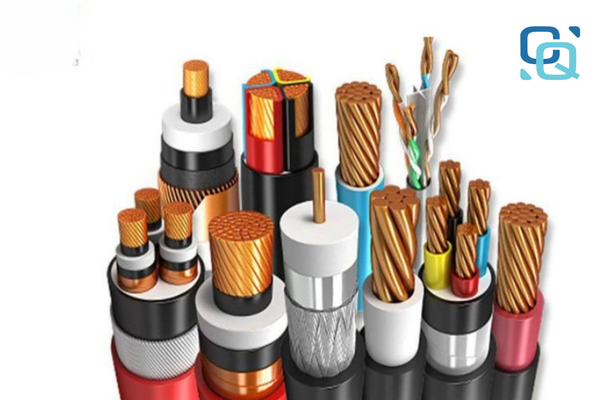
Electric cables are devices consisting of wires and cables, Used to transmit power or control signals. Conductors usually consist of one or more conductive cores (Usually made from copper or aluminum), may or may not have an insulating cover (called bare wire or covered wire).
Power cable, different from the wire, Usually there are many cores or just one core (single cable), surrounded by an insulating shell and an outer protective shell. This protective shell helps increase bearing capacity, against external agents such as water, tia UV, fire, or sunlight, Ensuring safety and durability during use.

Structure of electric cables
Electrical cables have a structure consisting of main components:
-
Conductive core: Usually made from copper (Cu) or aluminum (Al), Ensures good electrical conductivity.
-
Insulating shell: Use materials such as PVC, XLPE, or XLPO to prevent electric leakage.
-
Filler: PP fibers or similar materials to increase mechanical strength.
-
Bandage: Usually non-woven tape, Helps stabilize the cable structure.
-
Outer shell: Made from PVC or PE, Protects cables from environmental impacts.
Classification of electric cables
Electric cables are classified based on the following criteria:
-
According to the conductive core structure:
-
Hard wire: Consists of one strand or seven braided strands, Suitable for fixed applications.
-
Soft wire: Consists of many small braided fibers, more flexible, suitable for mobile devices.
-
-
According to the number of conductive cores:
-
Single wire: With/PVC 1x [cross-sectional area] mm².
-
Double wire: Cu/PVC 2x [cross-sectional area] mm².
-
Triple string: Cu/PVC/PVC 3x [cross-sectional area] mm².
-
-
According to the cover shape:
-
Round casing: Popular in civil applications.
-
Oval cover: Used in special equipment.
-
Suspension wire: Has a special insulating shell, Often used in harsh environments.
-
Application of electric cables
Electric cables are an indispensable component in industries, especially lighting, electricity transmission, and device control. Main uses include:
-
Transmits electricity from the source to civil appliances, industrial, or lighting system.
-
Connect and transmit control signals in automation systems, machines.
-
Used in construction projects, factory, or grid system.
Thanks to its high durability and good load-bearing capacity, Electric cables are widely used in life and production.
Electric cable import policy
Legal regulations
Importing electric cables into Vietnam must comply with the following legal documents:
-
QCVN 4:2009/BKHCN: National technical regulations on PVC-coated insulated wires and cables.
-
Circular 22/2011/TT-BKHCN (April 12, 2011): Regulations on quality inspection of imported electric cables.
-
Circular 38/2015/TT-BTC (March 25, 2015), Amended and supplemented by Circular 39/2018/TT-BTC (April 20, 2018): Instructions for customs procedures.
-
Circular 18/2019/QD-TTg (April 19, 2019): Regulations on importing goods fall under the risk management category.
Electric cables do not require specialized inspection
According to Circular 22/2011/TT-BKHCN, The following types of electrical cables do not require specialized inspection:
-
The power cable has pre-installed connectors, Usually part of a finished product (For example: cables in electronic equipment).
-
Electric cables are not coated with PVC but use other insulators.
These items belong to the category of group 2 products, managed according to national technical regulations but does not require quality inspection before customs clearance.
Electric cables must be inspected professionally
PVC coated electrical cables, especially with nominal voltage up to and equal to 450/750V, Must carry out specialized inspection according to Circular 22/2011/TT-BKHCN and Circular 27/2012/TT-BKHCN. Specifically:
-
PVC-coated insulated wires and cables must meet national technical regulations QCVN 4:2009/BKHCN.
-
Goods belonging to the list of group 2 goods (potentially unsafe) or there is a warning from an international organization to check quality before importing.
Import tax on electric cables
Businesses importing electric cables need to pay two main taxes:
-
Value added tax (VAT): 10%.
-
Preferential import tax: Ranging from 10% to 17%, depending on cable type and origin.
If the electric cables are imported from countries with free trade agreements (FTA) with Vietnam (like ASEAN, EU, or CPTPP), Businesses can enjoy special preferential tax rates if provided Certificate of origin (C/O) Fit. With more than 50 FTA agreements that Vietnam has signed, The opportunity to receive tax incentives is huge.
Procedures for importing electric cables
Documents need to be prepared
To carry out procedures for importing electric cables, Enterprises need to prepare the following documents:
-
Commercial invoice (Commercial Invoice): Details of value and quantity of goods.
-
Packing slip (Packing List): Information about packaging and number of packages.
-
Bill of lading (Bill of Lading): Sea or air shipping documents.
-
Certificate of origin (C/O): If you want to enjoy import tax incentives under FTA.
-
Quality inspection registration dossier: Implemented on the National Single Window System (if it belongs to the specialized inspection list).
-
Other documents (if any): Depending on customs requirements or type of goods.
Procedures for importing electric cables
-
Step 1: Declare customs declaration
-
Enter declaration information into the customs system through the software (like VNACCS).
-
Prepare complete documents according to regulations to submit to customs authorities.
-
-
Step 2: Open customs declaration
-
Print the declaration and bring the import documents to the customs department to open the declaration.
-
Depending on the stream (green, Yellow, red), Carry out inspection steps as prescribed.
-
-
Step 3: Clearance of declaration
-
Valid documents will be cleared.
-
Invalid records will be requested to be edited or supplemented.
-
Businesses pay taxes (VAT, Import tax) to complete customs clearance.
-
-
Step 4: Bring goods to warehouse
-
After customs clearance, Carry out liquidation of declarations and necessary procedures to bring goods to the warehouse.
-
Take samples to check quality (necessary) Can be done at the port or warehouse of the enterprise.
-
Register to check the quality of imported electric cables
Theo Decision 3810/QD-BKHCN, Electric cables on the quality inspection list must be registered on the National Single Window System (https://vnsw.gov.vn/). Implementation steps include::
-
Step 1: Create an account and register your profile
-
Visit https://vnsw.gov.vn/ and create a business account.
-
Register for quality inspection in the management section of the Ministry of Science and Technology.
-
Choose a sample testing unit licensed by the Ministry of Science and Technology.
-
Account review time usually takes about 24 hours.
-
-
Step 2: Sampling and quality checking
-
Send electric cable samples to the inspection agency at the port or warehouse of the business.
-
Quality inspection time according to TCVN usually takes 2-3 days, depending on the lab.
-
-
Step 3: Receive and download test results
-
After getting the quality test results, Enterprises or testing units upload results to the National Single Window System.
-
The Department of Standards, Metrology and Quality will review and accept or reject the application.
-
Cuong Quoc Logistics - A reputable unit supporting the import of electric cables
Logistics power, established since 2011, is one of the leading units in the field of logistics and import-export in Vietnam. Initially operating under the name Cuong Quoc Import Export Company Limited, We specialize in importing electronic products, electronics, and construction equipment. From 2020, The company changed its name to Cuong Quoc Freight Forwarding Company Limited, Expanding into the global logistics field.
With over a decade of experience, Cuong Quoc Logistics is proud to be a member of prestigious associations such as HLA, VLA, FIAT, and JCTRANS. We provide diverse services, include:
-
Shipping sea, airway, and domestic.
-
Customs declaration and import and export entrustment.
-
International courier.
-
Support quality inspection procedures and customs clearance of goods.
We are committed to providing optimal logistics solutions, Using modern technology and a team of experienced experts to support businesses importing electric cables quickly and effectively.
Conclude
Procedures for importing electric cables require careful preparation of documents, Quality check, and comply with legal regulations. Hope the article from Logistics power has provided useful information for you to import electric cables smoothly. Contact us for detailed and professional support!
Cuong Quoc Freight Forwarding Company Limited
Office: 7th floor, Parami Building, 140 Bach Dang, Tan Son Hoa Ward, Ho Chi Minh City
Hotline: 0972 66 71 66
Email: info@cql.com.vn
Website: https://cql.com.vn/

See more at