In the context of Vietnam's plastic industry continuing to grow strongly, demand import plastic beads In 2026, it is expected to exceed 12 billion USD, mainly from Korea, China, ASEAN and Taiwan.
Plastic pellets are divided into three main types: primeval (Virgin resin), reborn (recycled pellets) and scrap (plastic scrap). Each type has its own regulations, In particular, plastic scrap is strictly controlled because it is related to the environment. Understanding Procedures for importing plastic beads not only ensures legal compliance but also helps avoid common errors such as HS code confusion.
Article Content
Legal basis for importing plastic resins 2026
To import plastic beads legal in Vietnam in 2026, Businesses need to comply with core legal documents:
- Decision 13/2023/QD-TTg: List of scrap permitted for import, Only clean scrap is allowed, no waste mixed. This is the basis for distinguishing legal waste from prohibited waste.
- Circular 08/2018/TT-BTNMT (and amendments until 2026): Regulation of environmental conditions for import plastic beads scrap, includes environmental permits, Standard warehouse and environmental protection deposit.
- Circular 38/2015/TT-BTC and customs regulations: Apply HS code and required documents for all types of plastic beads.
- Group 3901–3907: Used for primary and recycled plastics (For example: 3901 cho polyethylene, 3903 cho polystyrene, 3904 for PVC).
- Group 3915: Exclusively for plastic scrap (plastic scrap, waste, pairings).
- Decree 187/2013/ND-CP and updates: Clearly distinguish recycled plastic (processed into granules) not subject to special management, while scrap must apply for a permit.
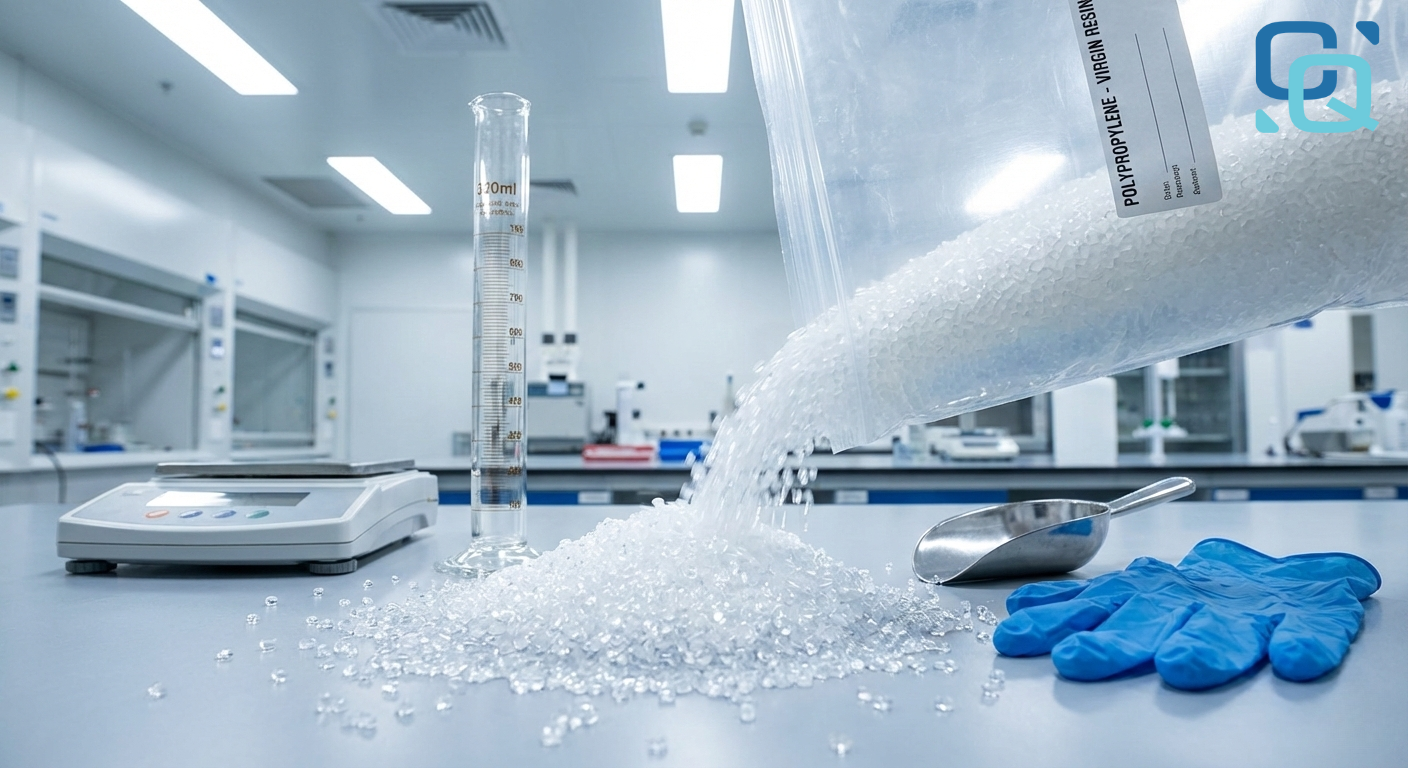
Set of documents for import of plastic beads
A set of documents is a decisive factor in the success of the company Procedures for importing plastic beads. Below is a detailed list based on practical experience:
Required documents (Applies to all types):
- Foreign trade contract (Sales Contract): Specify the type of plastic, quantity, price, Incoterms.
- Commercial invoice (Commercial Invoice): Product name, HS code, quantity, value.
- Packing slip (Packing List): Package number, weight, volume.
- Bill of lading (Bill of Lading – B/L): Confirm the goods have been loaded onto the ship.
- Customs declaration (Customs Declaration): Electronic declaration.
Documents are often available:
- C/O (Certificate of Origin): Required to prove origin, Enjoy tax incentives from FTAs (EVFTA, CPTPP…).
- Import license: Just for scraps.
- Cargo insurance certificate (Insurance Policy).
- Letter of credit (L/C): If payment via L/C.
Additional documents (very important):
- COA (Certificate of Analysis): Component analysis, Prove that the goods are clean materials.
- CQ (Certificate of Quality): Quality certification.
- MSDS (Material Safety Data Sheet): Chemical safety data sheet, It is especially necessary for recycled plastic and scrap to prove that it does not contain hazardous substances.
Quick checklist for employees:
- Contract (Sales Contract)
- Invoice (Commercial Invoice)
- Packing List
- Bill of Lading (B/L)
- C/O (Certificate of Origin)
- COA (Certificate of Analysis)
- MSDS (Material Safety Data Sheet)
- Import license (if scrap)
- Environmental permit & deposit (if scrap)
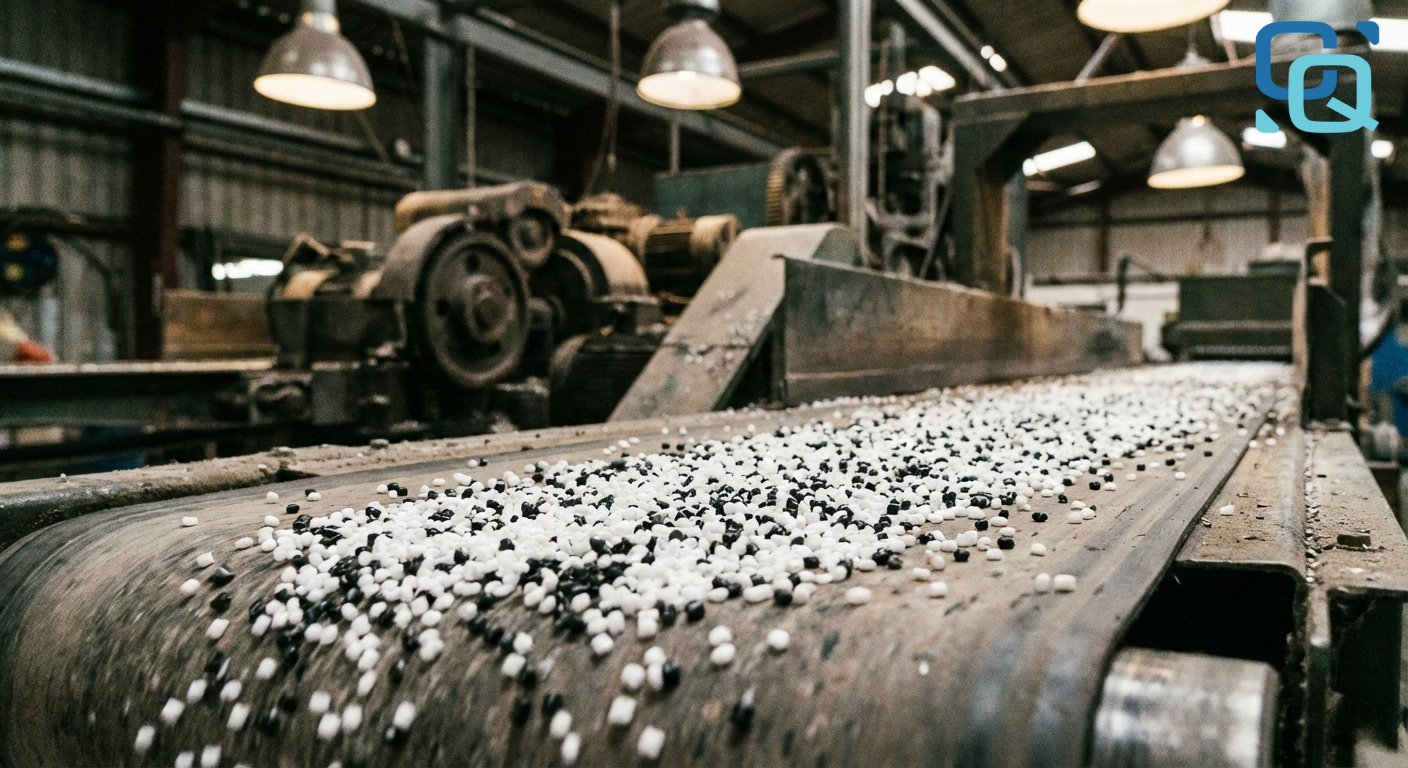
2026 plastic pellet import process in 5 steps
Step 1: Prepare contract & commercial documents
Sign the contract and collect all documents, especially C/O, COA, MSDS. With scrap, Prepare additional environmental permits and escrow.
Step 2: Check profile & Apply HS code
This is the most important step to avoid errors. Compare contracts, Invoice, COA, MSDS for accurate merchandise description. Apply HS code:
- 3901–3907 for genesis and regeneration.
- 3915 for scrap.
Step 3: Customs declaration
- Check documents → Transmit electronic declaration (Attach C/O, COA, MSDS) → Open the declaration (green/yellow/red channel division). With scrap, Also check for license and escrow.
Step 4: Apply for a scrap import license (Applies to scrap only)
Condition: Environmental permit, standard warehouse, deposit. Procedure: Prepare documents → Submit to the Ministry/Department of Natural Resources and Environment → Appraisal → Licensing.
Step 5: Customs clearance & check
- Pay taxes (import + VAT) → Customs clearance → Pulling goods to standard warehouse.
Important notes when importing 2026 plastic resins
Below are essential notes from practical experience:
- C/O required: No C/O, Goods may be considered waste, leading to customs clearance refusal or heavy fines.
- Avoid confusing HS codes between recycled plastic and scrap plastic – This is the most common mistake that causes delays and penalties:
- Regenerated plastic (recycled pellets): Processed, uniform grain shape, clean, considered a raw material for production. Apply HS code in the group 3901–3907 (depending on the type of polymer). No environmental permit required, deposit or special import license. Just need COA, MSDS to demonstrate quality and safety.
- Scrap plastic (plastic scrap): Crumb form, piece, not processed into granules, often mixed with impurities. Apply HS code 3915 (3915.10 cho polyethylene, 3915.90 for other types). A scrap import license is required, environmental permit, Standard warehouse and environmental protection deposit. If the HS code is applied incorrectly from 3915 to group 3900, Businesses may be subject to administrative fines, Confiscate goods or force re-export.
- Tips to avoid confusion: Carefully check the appearance of the goods (uniform seeds → regeneration; scrap/piece → scrap), Refer to COA/MSDS and goods description in Invoice/Packing List must be accurate (For example: “Recycled PE pellets” thay vì “Plastic waste”). This error can increase costs by up to 20-30% due to penalties and storage.
- MSDS for goods with chemical elements: Especially needed for recycled/scrap plastics with additives, Helps prove that it does not contain hazardous substances.
- Standard goods description: Use precise terminology such as “Virgin PE resin”, “Recycled PVC pellets”, “Clean plastic scrap”.
- Other risks: Documents lacking COA/MSDS lead to red flow; Non-deposited scrap is detained. 2026, environmental checks and carbon footprint may increase.

Conclude:
Procedures for importing plastic granules 2026 requires careful preparation, especially C/O documents, COA, MSDS and apply the correct HS code to avoid confusion between regeneration and scrap. With rising demand, Businesses need to act quickly and professionally.
Cuong Quoc Freight Forwarding Company Limited
Office: 7th floor, Parami Building, 140 Bach Dang, Tan Son Hoa Ward, Ho Chi Minh City
Hotline: 0972 66 71 66
Email: info@cql.com.vn
Website: https://cql.com.vn/

See more at