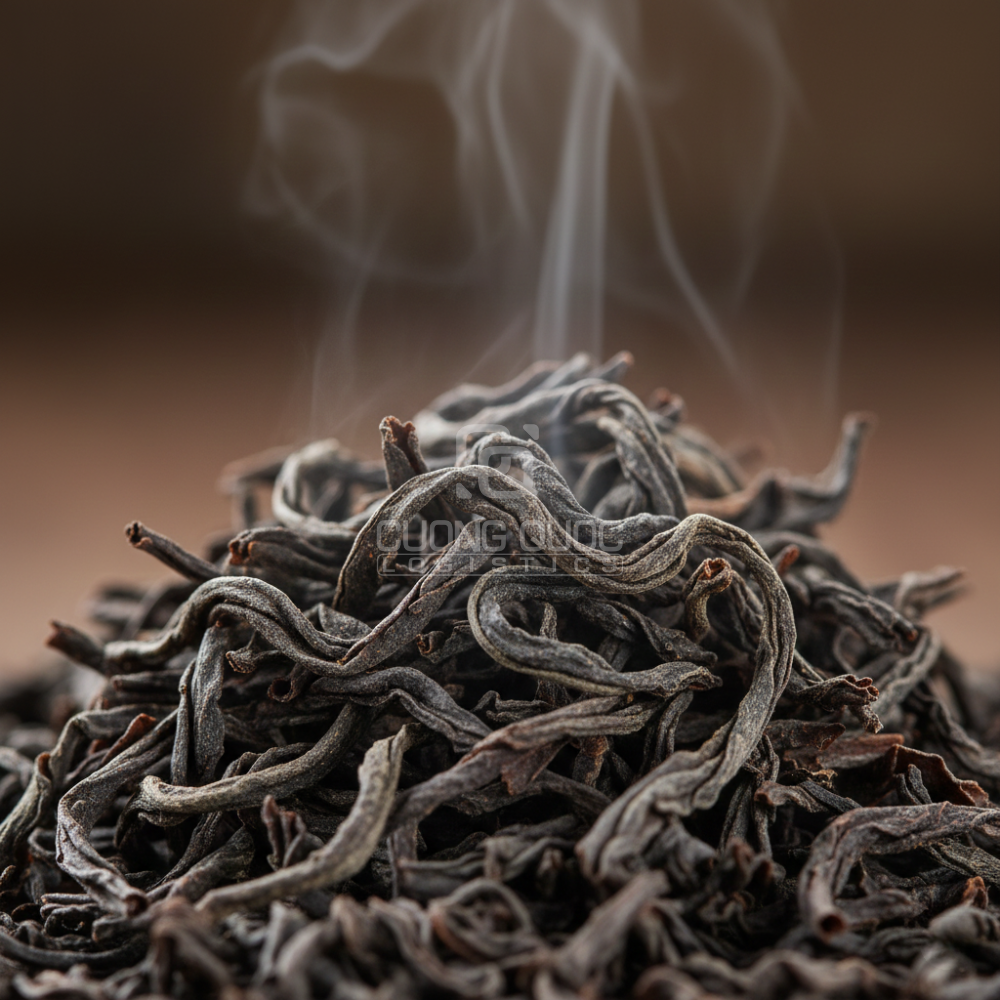
Tea (Includes green teas, black tea, Oolong tea, tea bags) is a strong import item and has grown in recent years, So having a correct tea import process is also important. This is currently a product under strict management by 3 agencies: Ministry of Health, Ministry of Industry, Trade and Customs.
Here are the complete instructions, Step-by-step details on the tea import process as well as notes compiled and compiled by Cuong Quoc.
-

Detailed Tea Import Procedures 2025 Article Content
Main legal documents that need to be applied when importing tea
| STT | Document | The main content applies to tea |
| 1 | Decree 15/2018/ND-CP | Self-publish the product & State inspection of food safety for imported food |
| 2 | Circular 52/2015/TT-BYT | State inspection regulations on imported food safety |
| 3 | Decree 43/2017/ND-CP | Regulations on product labels (Compulsory labeling in Vietnamese) |
| 4 | VAT Law & guidance documents 2024–2025 | VAT on tea powder, Current dry tea is 8% (Some premium teas are still 10%) |
-
Detailed step-by-step tea import process
Step 1: Self-publish the product (Compulsory for all batches of tea imported for the first time)
Base: Decree 15/2018/ND-CP Time: 7–15 business days
Self-declared records include::
- Business registration certificate (notarized copy)
- Product self-declaration according to Form No. 01 Appendix I
- Food safety testing result card (performed by a laboratory meeting ISO 17025 standards, Validity ≤ 12 months)
- Sample main product label + expected secondary label (in Vietnamese)
Place of submission:
- For businesses in Hanoi/Ho Chi Minh City and the Northern provinces, they can submit to the Food Safety Department (Ministry of Health)
- For southern provinces, it will be submitted to the local Food Safety and Hygiene Department or the online public service system.
After the application is approved, Businesses can use it for many future lots.
Step 2: Register for imported food safety inspection
Base: Circular 52/2015/TT-BYT and Decree 15/2018
Tea is in Appendix I - List of food safety inspections required by the state (except for some exempted cases).
Examination registration dossier (Submit 3-7 days before the goods arrive):
- 04 copies of registration for inspection Form 04 Appendix I Decree 15/2018
- The product self-declaration has been approved
- Invoice, Packing list, Bill of Lading/Airway Bill
- Authorization letter responsible for quality (if imported)
- Additional documents (if any): Health Certificate, Free Sale Certificate, Certificate of Analysis
Place of submission: Regional Quality Measurement Standards Technical Center (QUACERT) or the local Food Safety Department with the border gate.
Processing time: 3–7 working days After 3–5 consecutive batches meeting standards, they can be transferred to normal inspection or exempted..
Step 3: Do customs procedures
- Declare electronic customs declaration on VNACCS/VCIS
- Common HS codes for tea: 0902.10 – 0902.40 (green tea, black tea, Fermented tea…) 2101.20 (milk tea powder, Ready-made matcha powder)
- Import tax: 0–30% depending on origin and with C/O form E, AND, VJ… or not
- VAT: 8% (for most teas and tea powders in 2025)
Full customs records:
- Customs declaration
- Invoice, Packing list, B/L
- C/O (if you enjoy incentives)
- Food safety inspection registration certificate + Self-declaration receipt
- Vietnamese secondary labels are already pasted on the goods or committed to be pasted at the warehouse
Step 4: Add Vietnamese labels (Mandatory before customs clearance)
Base: Decree 43/2017/ND-CP
Mandatory content on secondary labels:
- Commodity name (VD: Japanese green tea, Pure matcha powder…)
- Name + address of responsible organization/individual
- Origin of goods
- Quantitative (net weight)
- Production date – Expiry date
- Ingredient (Full list)
- Storage instructions & use
- Warning (if any)
Secondary labels must be securely attached, Do not obscure the original label and must be completed before the goods clear customs or at the latest before being released to the market.
- Important notes when importing tea in 2025
-
- Tea contains caffeine > 150mg/kg may require additional testing of caffeine criteria.
- Matcha powder, Milk tea powder is often strictly controlled for synthetic color criteria, preservatives.
- Japanese goods, Taiwan, China, Sri Lanka being the majority will need to prepare a full Health Certificate/Free Sale from the exporting country to avoid congestion.
- Enterprises importing for the first time should make self-declaration and inspection right from the first batch to avoid penalties (Fines range from 30–100 million VND if not self-declared).

Conclude
Procedure import tea Although entering Vietnam has many steps, it can be optimized to only 10-15 days if you prepare all documents and have experience.. New businesses should cooperate with logistics + legal service units specializing in food to avoid the risk of goods being held at the port..
Logistics power – with more than 12 years of in-depth experience in imported food (tea, matcha, milk tea, ingredients for preparation…) – Committed to providing comprehensive business support from A–Z:
- Do plant quarantine & Phytosanitary Certificate
- Self-publish the product & Fast standard testing within 7 days
- Register for food safety inspection + take samples at the border gate
- Attach standard secondary labels & red stream processing (if any)
- Customs clearance - delivery to storage warehouse
Cuong Quoc Freight Forwarding Company Limited
Office: 7th floor, Parami Building, 140 Bach Dang, Tan Son Hoa Ward, Ho Chi Minh City
Hotline: 0972 66 71 66
Email: info@cql.com.vn
Website: https://cql.com.vn/

See more at