Multimodal transport is an important concept in the logistics industry, But what exactly is it?? What are the popular types of multimodal transport?? This article will answer the above questions in detail, help you better understand this field.
Article Content
What is multimodal transportation?
Multimodal transport (Multimodal Transport) is a form of transporting goods using at least two different modes of transport, such as roads, railway, by water or by air, in a continuous supply chain.
The goal of multimodal transport (VDTPT) is to ensure goods are moved from origin to destination effectively, through combining different transportation methods. This process is carried out based on a single contract, Use a unified transport document and only one party is responsible for the entire transport journey.
Nowadays, VDTPT is becoming increasingly popular thanks to its ability to meet diverse market needs, from bulk freight to high-speed shipments. This type not only helps optimize costs but also increases flexibility in logistics.

Regulations on Multimodal Transport
To better understand VDTPT, We need to understand the relevant regulations, both internationally and in Vietnam.
International Regulations
According to the United Nations Convention on the International Multimodal Transport of Goods (UN Convention on the International Multimodal Transport of Goods), adopted in Geneva on August 24, 1980, DVTPT is defined as the process of transporting goods using at least two different modes of transport based on a single contract..
United Nations Trade and Development Commission (UNCTAD) together with the International Chamber of Commerce (ICC) issued the UNCTAD/ICC Rules on Multimodal Transport Documents, effective from January 1, 1992. This rule provides a unified legal framework for maritime transport activities globally.
The 1980 Geneva Convention also defines Multimodal Transport Operator (Multimodal Transport Operator – MTO) means the individual or organization that signs the DVTPT contract, Mainly responsible for implementing the contract, not just as an agent but as an official party on behalf of shippers or carriers.
Regulations In Vietnam
In Vietnam, VDTPT is regulated by a number of legal documents, include:
-
Decree 125/2003/ND-CP and Circular 10/2004/TT-BGTVT (June 23, 2004) implementation instructions.
-
Decree 87/2009/ND-CP on multimodal transport.
-
Circular 45/2011/TT-BTC regulate customs procedures for international multimodal transport goods.
-
Official Dispatch 3038/TCHQ-GSQL Instructions for implementing Circular 45/2011/TT-BTC.
-
Decree 89/2011/ND-CP modify, Supplementing a number of articles of Decree 87/2009/ND-CP.
According to Decree 87/2009/ND-CP, Enterprises and cooperatives in Vietnam that want to do international couriers must meet the following conditions:
-
Have a Business Registration Certificate, which includes the international maritime transport profession.
-
Maintain minimum assets equivalent to 80.000 SDR or equivalent guarantee.
-
Have professional liability insurance or equivalent guarantee.
-
Possessing an International Transport Business License.
Decree 89/2011/ND-CP (issued on October 10, 2011) Supplementing the regulation that businesses that want to apply for an International Multimodal Transport Business License need to submit documents to the Ministry of Transport., include:
-
Application for issuance of International Transport Business License.
-
Certified copy of Business Registration Certificate, including the international transport and communication profession.
-
Confirmation of asset value from a financial agency or equivalent guarantee.
Characteristics of Multimodal Transport
VDTPT has a number of outstanding features, include:
-
Combine at least two shipping methods: Could be road, railway, waterway or air.
-
Continuous transport chain: Goods are transported from the point of origin to the point of destination (door-to-door) without opening the packaging when changing media.
-
Unified contracts and documents: The entire shipping process uses a single contract and transport document.
-
Centralized responsibility: The VTPT trader is responsible for all aspects from receipt of goods to delivery to the recipient.
-
Optimize costs and time: VDTPT helps reduce costs, Simplify documentation and ensure continuity in transportation.
-
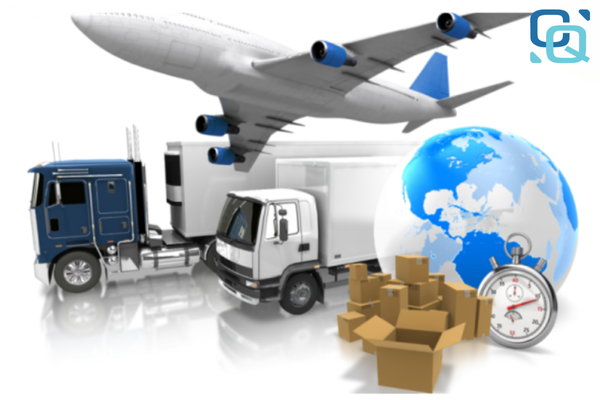
What is multimodal transportation? Meet diverse needs: Suitable for many types of goods, From normal goods to special goods.
Types of multimodal transport
VDTPT has many different types, depending on the combination of shipping methods. Below are some popular types:
1. Sea Freight – Air Freight (Sea – Air)
This is a model combining sea and air transport, Take advantage of the advantages of both: Large volume from sea and fast speed from air. This type is suitable for seasonal or high-value items such as electronics, clothes, shoes, toy.
For example, Goods are transported by ship to an intermediate port, then transported by air to inland areas, Ensures speed and efficiency.
2. Road Transport - Air Transport (Road – Air)
This model combines the flexibility of road and the speed of aviation. Goods are transported by truck to airports, then transported by plane to the destination, then continue to use trucks to deliver goods to the door.
This type is ideal for shipments that need to be collected from multiple sources or delivered to areas not near seaports.
3. Rail - Road Transport (Rail – Road)
The combination of rail and road provides high safety and efficient transportation. This type is popular in Europe and America.
Goods are packed in trailers, towed by car (tractor) Transport to train station. At the station, The trailer is loaded onto a train car and transported to the destination station. Afterward, The tow truck continues to deliver goods to the final delivery point.
4. Transport by Rail/Road/Inland Water – Sea (Rail/Road/Inland Waterway – Sea)
This is a popular model in transporting import and export goods. Goods are transported by rail, by road or inland waterway to the seaport of the exporting country, then transported by ship to the importing country. At the destination, Goods continue to be distributed by domestic methods.
This type is suitable for container shipments on long shipping routes, No urgent delivery required.
5. Continental Bridge Model (Land Bridge)
The continental bridge model uses sea routes to transport goods across oceans to a port on the continent, then transfer by road or rail to another seaport, Continue your journey by sea.
For example, Goods from Asia are shipped across the Pacific to the US, then transported by rail across the American continent to continue on to Europe.
Besides, There are also other models such as Mini Bridge (Goods are transported from one country's port to another, then transferred by rail to another port city in the same country) and Micro Bridge (Similar to Mini Bridge, but the final destination is a domestic area such as an industrial park or a commercial center).
The Role of Multimodal Transport
VDTPT plays an important role in the modern logistics industry, with the following benefits:
-
Increase competitiveness: Reduce shipping costs and delivery times, thereby helping businesses provide products at better prices.
-
Expand transportation network: Suitable for large volume transportation, Helps businesses access international markets more easily.
-
Promote global trade: VDTPT connects markets, Support import and export and promote economic growth.
-
Supply chain optimization: Guaranteed continuous transportation, Minimize waiting time and simplify administrative procedures.
Conclude
Multimodal transport is an effective logistics solution, Combine many transportation methods to meet diverse market needs. With clear regulations and flexible types, VDTPT not only helps optimize costs but also promotes international trade. To update more useful information about logistics, Stay tuned for articles from reputable industry sources.
Cuong Quoc Freight Forwarding Company Limited
Office: 7th floor, Parami Building, 140 Bach Dang, Tan Son Hoa Ward, Ho Chi Minh City
Hotline: 0972 66 71 66
Email: info@cql.com.vn
Website: https://cql.com.vn/

See more at