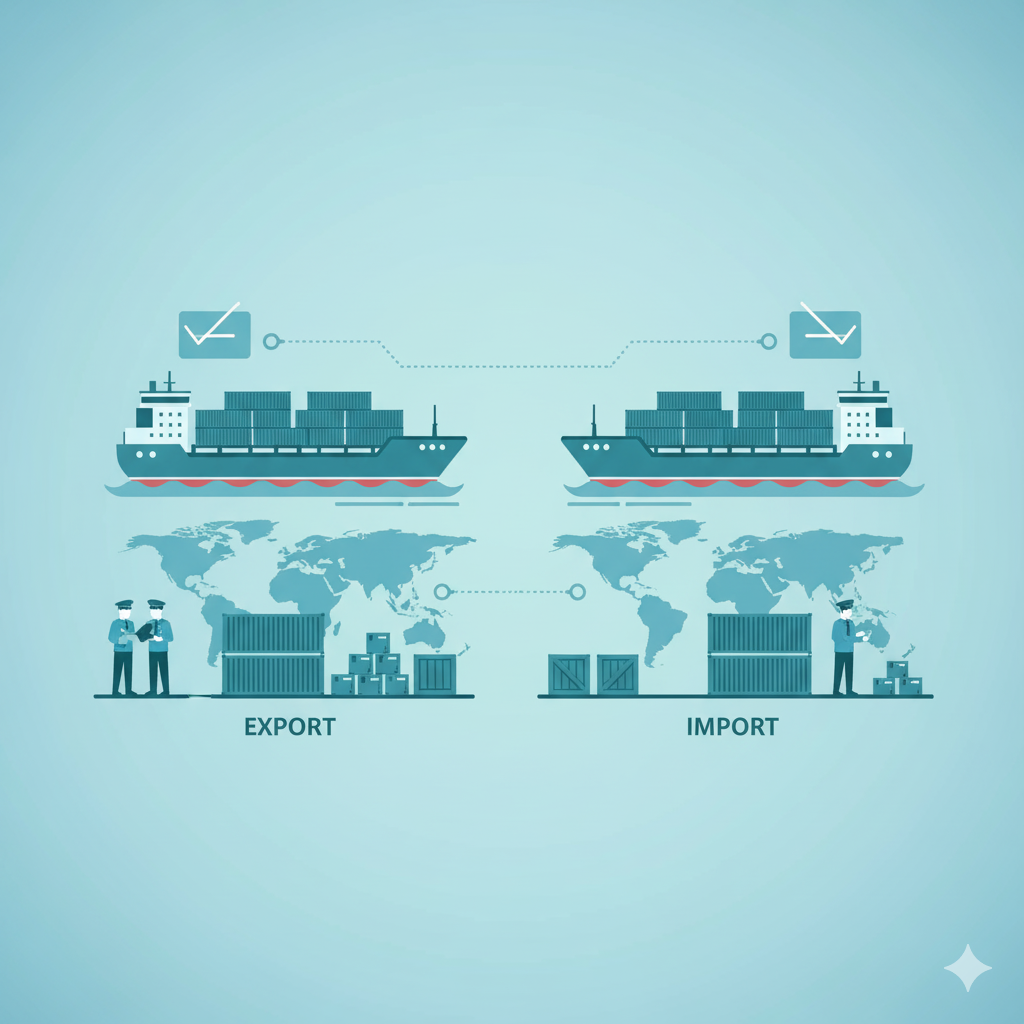
In the context of increasingly deep economic integration, import foreign goods officially plays an important role in the development strategies of many Vietnamese businesses. Importing goods through official channels not only helps ensure legality, transparency but also creates favorable conditions for businesses to expand their markets, increase competitiveness and sustainable development. However, For businesses that are just starting out or do not have much experience, related legal processes and requirements import foreign goods Official status often brings many challenges.
In this section, We will go deeper into the following main contents together:
- The importance of import foreign goods officially for businesses.
- Challenges are often encountered when starting to import goods from international markets.
- The goal of the article is to provide knowledge, Specific instructions and practical experiences so that businesses can safely import official goods, effectively and in accordance with the law.
Article Content
- 0.1 Correct understanding of "official import of goods"
- 0.2 Official process of importing foreign goods
- 1 5 important experiences for new businesses importing foreign goods
The importance of officially importing foreign goods
Implementation import foreign goods officially brings many obvious benefits. First, It helps businesses ensure the legality of goods, Avoid the risk of stock being held, fines for violations or face complex handling procedures when not complying with legal regulations. Monday, Officially imported goods are often inspected for quality, Have all valid documents such as contract, bill, certificate of origin, Helps businesses easily carry out customs procedures, taxes and next steps in the supply chain.
Furthermore, import official goods It also creates favorable conditions for businesses:
- Deductible input VAT.
- Clear management of origin, goods quality.
- Market expansion, Build brand reputation based on legal products, transparent.
- Limit legal risks, tax arrears, sanction, or the goods are seized.
Challenges for new businesses starting out
Although it brings many benefits, job import foreign goods officially For newly established businesses, there are still many difficulties. Some common challenges include:
- Understand the process and procedural steps from item identification, Sign a contract, come to do customs clearance.
- Master the regulations on HS codes, tax rate, license, Specialized inspection, label, Announce products in accordance with legal regulations.
- Face additional costs such as shipping fees, phí local charges, Import tax, VAT, customs declaration fee.
- Choose a reputable logistics partner to ensure goods are transported safely, on schedule.
- Legal risk management, goods quality, Documents proving valid origin.
That's why, careful preparation, Having clear knowledge and cooperation with professional units are the deciding factors for success in the process of importing official goods..
Objective of the article
This article aims to provide complete knowledge, Practical experience as well as detailed instructions import foreign goods officially for businesses, especially businesses that are just starting out or do not have much experience in this field. Specifically, This article will help your business:
- Understand the definition, characteristics of import official goods and clearly distinguish it from petty forms.
- Master the official import process from the step of product identification, Sign a contract, to customs clearance and delivery procedures.
- Equipped with tips, Practical experience to avoid errors, Optimize costs and shorten import time.
- Understand the costs involved in the import process to have a reasonable budget plan.
- Select and cooperate with reputable logistics partners, Professional to ensure goods are transported smoothly, according to regulations.
Through this article, Cuong Quoc Logistics wants to become a trusted companion, provides comprehensive solutions, helping Vietnamese businesses confidently enter the international market, perform import foreign goods officially safely, effective and sustainable.
Correct understanding of "official import of goods"
During international business, job import foreign goods in the official form plays an extremely important role and brings many benefits to businesses. However, to take full advantage of these advantages, Businesses need to clearly understand the concept, Characteristics and benefits of officially importing goods to avoid legal risks as well as optimize the import process.
Definition and characteristics of official imports
Import official goods is a form of import of goods carried out in accordance with the provisions of Vietnamese law, includes signing a contract, issue invoice, bill of lading, Customs declaration and compliance with quality inspection regulations, quarantine and legal documents. The main characteristics of official imports can be summarized as follows:
- Legal and complete documents: All related documents such as sales contract, commercial invoice, bill of lading, certificate of origin (C/O) must all be valid, clear, fully and in accordance with the law.
- Comply with customs procedures: Make accurate customs declarations, pay taxes on time, Inspect and handle goods according to customs procedures.
- Goods meet standards: Quality tested, food safety inspection, Technical standards in accordance with Vietnamese law.
This helps businesses ensure the legality of their goods, create favorable conditions for expanding markets and building reputation in international business.
Compare official quota and small quota
To clarify the role of import official goods, We can compare it with informal import, which is popular but potentially more risky:
| Criterion | Official rank | Small class |
|---|---|---|
| Invoices – documents | Full, legal, valid | Often missing or absent, not valid |
| Legality | Recognized, valid, tax deductible | Risk, easy to detect, Not eligible for tax deduction |
| Goods | Tested, standards guaranteed | May not meet standards, origin unknown |
Importing goods officially not only helps businesses avoid legal problems, but also creates a solid foundation for long-term business development, Expand domestic and foreign markets.
Benefits of importing official goods for businesses
The correct understanding of import official goods will bring many practical benefits to businesses, can be mentioned as:
- Legal safety: Goods are imported legally, according to regulations, Avoid being detected and fined for customs violations.
- Long-term cost savings: Although it may cost more initially, but in the long run, Businesses will minimize fines, costs related to error handling or tax collection.
- Easily expand the market: Domestic and foreign partners prioritize cooperation with businesses with clear documents, transparent, makes it easier to participate in international business activities.
- Enhance brand reputation: Officially imported products demonstrate professionalism, comply with the law, contributes to building reputation in the market.
From the above analysis, can see that Correct understanding of official import of goods is an important foundation to help businesses not only avoid legal risks but also optimize import activities, Expand business scale in a sustainable way. This requires businesses to master the regulations, Prepare complete documents, Cooperate with reputable and experienced logistics units in the field of official import.
Official process of importing foreign goods
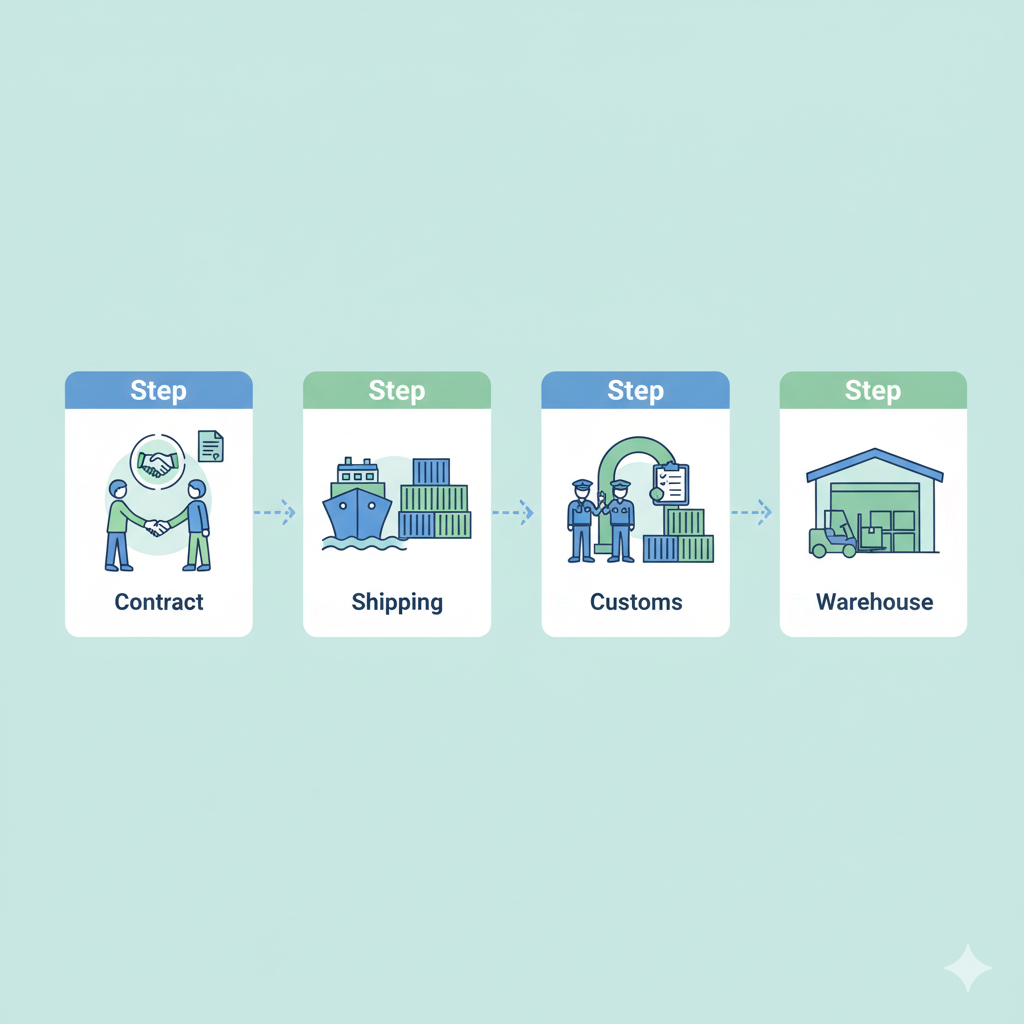
In the process of importing foreign goods, official import process plays a key role in ensuring goods are transported legally, transparent and convenient. This is a form of import with full legal documents such as sales contracts, commercial invoice, bill of lading, related license, and declare customs in accordance with State regulations. Below are detailed steps to help businesses understand and implement this process methodically and effectively.
Steps to identify products and import policies
The first step in Official process of importing foreign goods is to clearly identify the products that need to be imported and learn about related import policies. Businesses need to do it:
- Look up HS code (Harmonized System): This is an important step to help determine the correct type of product, From there you can know the tax rate, specialized inspection regulations, License required or not?.
- Check import policy: Includes restrictions, quota, technical standards, quarantine or specialized inspection. This helps businesses avoid delays in goods or fines for violations.
- Determine required licenses: Some items such as food, cosmetics, chemical, Electronics... require an import license or quality inspection, safe.
Accurate identification of goods and import policies helps minimize legal risks, Save time and costs during the official import process.
Prepare and sign the contract, Necessary documents
After clearly defining the products and policies, Enterprises need to prepare documents and sign sales contracts with foreign partners:
- Sales contract (Contract): Specify delivery conditions, payment method, time, goods quality.
- Commercial invoice (Invoice): Shows the value of goods, quantity, seller - buyer information.
- Packing list (Packing List): Details of the packages, size, weight, packing method.
- Bill of lading (Bill of Lading or Air Waybill): Documents for transporting goods by sea or air.
- Certificate of origin (C/O): Confirm the origin of goods, can reduce taxes or enjoy incentives.
Besides, Businesses need to check, Compare these documents to ensure legality, Exactly, in accordance with the provisions of law. This preparation process plays a decisive role in facilitating customs clearance and avoiding legal or financial risks..
Customs clearance procedures and goods handling
Once you have completed the preparation steps, Enterprises need to carry out customs clearance procedures according to official procedures:
- Customs declaration: Submit electronic or paper customs declaration at the customs office, Provide all prepared documents.
- Pay taxes and fees: Including import tax, VAT, customs fees, storage fee, Quality check (if any).
- Check the goods: Customs may perform physical inspections or document checks to confirm the validity of the goods.
- Handle problems that arise: During customs clearance, There may be problems such as lack of licensing, Wrong HS code, or goods are held back due to document discrepancies. Businesses need to coordinate quickly to solve the problem.
Correct implementation of customs clearance procedures helps goods quickly arrive at the warehouse, Minimize storage costs and avoid legal risks.
Delivery and completion of accounting records
After the goods have successfully cleared customs, Final steps in official import process To be:
- Delivery to the agreed location: The business or logistics unit will transport the goods to the warehouse.
- Store valid documents: Contract included, bill of lading, inspection deed, bill, Tax receipts are used as a basis for future accounting and tax declaration.
- Complete accounting records: Record documents in books, Calculate input VAT for deduction according to the provisions of law.
- Check, Compare and maintain records: To ensure complete legal documents, Easily look up and handle related procedures later.
During this process, Cooperating with reputable logistics units like Cuong Quoc Logistics will help businesses handle matters quickly, exact procedures, Limit errors and optimize costs.
So, Official process of importing foreign goods requires careful preparation, comply with legal regulations, from the item identification step, Sign a contract, Prepare documents, Customs clearance to delivery and completion of accounting procedures. New businesses starting out should understand each of these steps to limit risks, Ensure goods arrive on time, comply with the law and optimize costs. Accompanying reputable logistics units will help this process become much easier and more effective.
See More: Sea shipping service
5 important experiences for new businesses importing foreign goods
In the context of increasingly expanding economic integration, import foreign goods officially becoming one of the important strategies to help Vietnamese businesses expand their markets, enhance reputation and compete effectively.
However, for businesses just starting out, This process is not simple or easy. The lack of knowledge about the process, procedure, as well as legal regulations that can lead to many risks such as administrative fines, Goods are retained, or costs arising uncontrollably. Here are 5 important experience that new businesses need to pay attention to when importing foreign goods in the official form.
1. Carefully check the HS code and product policy
One of the most important steps when importing foreign goods officially is determining the correct HS code of the item. HS code (Harmonized System) is an international coding system used to classify goods during the import and export process. Deviations or confusion in HS codes may result:
- Applying the wrong tax rate, causing unnecessary cost increases
- Goods are detained or processed slowly at the port or border gate
- Administrative fine or tax collection later
Therefore, businesses need:
- Look up the exact HS code of the item based on the instructions of the customs authority
- Refer to relevant tax policies, regulations on import restrictions or bans for that item
- Get professional advice if necessary to ensure appropriate HS codes, Avoid legal and financial risks
2. Prepare full import documents
Documents are a key factor to help the official import process go smoothly, transparent and legal. Enterprises need to fully prepare the following documents:
- Commercial contract (Contract): clearly state the terms of sale, value, Delivery conditions
- Commercial invoice (Invoice): Prove the value of goods and payment
- Packing list (Packing List): Quantity details, weight, cargo size
- Bill of lading by sea or air (Bill of Lading / Air Waybill): International shipping documents
- Certificate of origin (C/O): necessary for tax regulations or trade incentives
- Licenses, related certification (if any), as quality control, food hygiene and safety
All of these documents must match, clear, accurately to avoid errors or refusal of customs clearance.
3. Understand clearly labeling regulations and product announcements
In addition to legal documents, Businesses need to pay special attention to regulations on labeling and product announcement according to Vietnamese law. Some items such as food, cosmetics, electronics, Must-have children's toys:
- Secondary labels are clearly in Vietnamese, Full information such as ingredients, expiry, Instructions for use
- Declaration of conformity or certification of conformity with Vietnamese standards (TCVN)
- Meets labeling requirements, labels according to regulations of the Ministry of Industry and Trade or relevant agencies
This helps avoid penalties, Goods are returned or suspended from circulation.
4. Estimate package costs before importing goods
When starting to officially import foreign goods, Businesses need to carefully estimate costs to ensure a reasonable budget and avoid unexpected occurrences. Expenses included:
- International shipping fee (sea route, air)
- Local charges on both ends (Domestic shipping fees, handling, check, document)
- Import tax, VAT and customs fees
- Specialized inspection or licensing fees (if any)
- Warehouse costs, save cont, Storage at ports or inland warehouses
- Other additional fees such as storage fees, inspection fee, cargo insurance
Clearly calculating these amounts helps businesses control their budget well, Avoid being financially "broken" and be proactive in the negotiation process, sign the contract.
5. Cooperate with a reputable logistics unit
Choosing a reliable logistics partner is a key factor for the official import process to go smoothly. A reputable logistics unit not only helps businesses:
- Consulting on processes, customs declaration procedures, import license
- Ensure goods are transported safely, on schedule
- Quickly handle arising issues during customs clearance or transportation
- Document management, valid profile, Minimize the risk of fines or detention
New businesses should choose logistics units with experience in the field of official imports, Full service available, Free consulting support and a team of experts to quickly process documents to optimize the process, Minimize risks and save costs.
In the process of officially importing foreign goods, Understanding and correctly applying the principles experience The above will help businesses not only save time, costs but also ensure compliance with the law, Build a solid brand reputation in the international market. Thorough preparation from HS code checking step, document, label regulations, Choosing the right logistics partner will create a solid foundation for the sustainable development of businesses in the import sector..
Cost of importing foreign goods you need to know
In process import foreign goods officially, Determining and estimating costs is a key factor to help businesses manage their budget effectively and limit unexpected risks.. Below are the main costs businesses need to understand to have a clear plan, thereby optimizing the import process.
International shipping fees and local charges
One of the biggest expenses when import foreign goods The main quota is the international shipping fee. Depends on the mode of transport (sea route, airway), Rates will vary significantly:
- Ocean Freight (freight by sea): Usually suitable for large goods, heavy, More competitive prices but longer delivery times.
- Air Freight (freight by air): Suitable for urgent goods, The cost is higher but the time is quick.
Besides, There are also local charges at both ends, include:
- THC charges (Terminal Handling Charges): loading and unloading fees at the port.
- Document processing and customs clearance fees.
- Storage fee, Luu Bai (If the goods are in stock for a long time).
- Inspection fee, test (If the goods require specialized inspection).
These fees are often clearly calculated in the transportation contract and need to be determined accurately by the business to avoid exceeding the expected amount..
Import tax, VAT and customs fees
Import tax is one of the mandatory fees when importing official goods from abroad. This tax rate depends on the HS code of the item, each country's tax policy and bilateral or multilateral trade commitments. Determining the correct HS code will help businesses accurately calculate the tax payable.
Besides import tax, Businesses still have to close VAT tax according to the provisions of Vietnamese law. Normally, VAT will be calculated on the value of the goods plus import tax, helps reduce the final cost of the business when deducting input tax.
Besides, Customs related fees such as:
- Customs declaration fee.
- Inspection fee, test (if required).
- Other additional fees related to customs clearance procedures.
These amounts need to be carefully planned to avoid delays and unforeseen costs.
Domestic transportation costs and incidentals
After the goods have passed customs procedures, Businesses also need to consider inland transportation costs from the port to the warehouse or distribution point:
- Domestic transportation fee by truck, train or other means.
- Storage fee, loading and unloading, domestic delivery.
- Additional expenses such as container storage fees, parking fee, inspection fee, domestic inspection.
Besides, during the import process, Other complications may occur such as::
- Overdue storage fee.
- Fees for handling defective or returned goods.
- Fees incurred due to schedule changes or cancellation of transportation contracts.
Understanding these costs helps businesses have a clear budget plan, thereby optimizing costs and improving import efficiency.
In process import foreign goods officially, Understanding these costs not only helps businesses be proactive in budget management but also minimizes unexpected risks.. Cooperating with reputable logistics partners like Cuong Quoc Logistics will help you control these fees well, Ensure goods arrive on schedule, in accordance with the law, At the same time, optimize the cost of the entire import process.
Why should you choose Cuong Quoc Logistics when importing foreign goods?
In the process of importing foreign goods, especially form import official goods, Choosing the right logistics unit plays a decisive role in the success of the entire process. With more than 10 years of experience in the field of international logistics, Cuong Quoc Logistics is proud to be a reliable partner, Helps Vietnamese businesses easily carry out official import procedures in a professional manner, safest and most economical.
Experience and expertise in the field of logistics
One of the top reasons businesses should choose Cuong Quoc Logistics is thanks to its staff seasoned experience and highly specialized in the field of international logistics, especially import foreign goods officially. Our specialists have successfully handled thousands of shipments, including many complex items that require extensive knowledge of legal regulations, HS code, Tax rates and specialized inspection requirements.
We understand each process clearly, each legal procedure, Helps businesses avoid risks such as detained goods, Penalties or losses due to errors in customs declaration or lack of valid documents. With practical experience, Cuong Quoc Logistics always updates the latest legal policies, Ensure all import activities comply with regulations, thereby helping businesses save time, costs and avoid unwanted problems.
Full service and free consultation
One of the outstanding advantages of Cuong Quoc Logistics is service package, Including initial consultation, Determine HS code, Prepare documents, Book train booking, customs declaration, to deliver to the customer's warehouse. This helps businesses not have to worry about complicated steps, It's time consuming and prone to errors if you do it yourself.
We also provide Free consulting service about the procedures, tax policy, license, Helps customers have a clear and proactive view during the import process. Special, Our staff is always ready to support businesses in providing the most optimal cost solutions, import time and process.
Our team of experts processes documents quickly
Official import procedures require accuracy in document processing and customs declaration. With a team of experts agile, knowledgeable about legal regulations, Cuong Quoc Logistics commits to handling file one way Exactly, quick, Minimize storage time, Avoid holding goods or incurring unwanted costs.
We always put our customers' interests first, Ensure all documents are as per contract, bill, packing list, Bill of Lading, C/O are thoroughly checked before submission, helps the customs clearance process go smoothly, lawful. Simultaneously, We also closely monitor the processes, Quickly update regulatory changes, Support customers in all situations that arise, thereby minimizing risks and unnecessary costs.
In short, Choosing Cuong Quoc Logistics when importing foreign goods officially not only helps businesses feel secure legally, Optimize costs but also save time, improve business performance. We are committed to accompanying businesses every step of the way, from preparing documents until goods arrive at the warehouse, brings peace of mind and success in official import activities.
Conclude
Importing foreign goods officially plays an important role in helping businesses develop sustainably and ensure legality in international business activities.. Through this article, We have a clear understanding of the official import process, including steps to identify items, Prepare documents, Customs clearance procedures and completion of accounting records.
Simultaneously, correct understanding of the concept, Benefits of importing official goods along with important experiences such as checking HS codes, Prepare complete documents, Understand labeling regulations, Estimating costs and cooperating with a reputable logistics unit will help businesses avoid risks and optimize costs.
This topic not only emphasizes the importance of importing goods according to regulations, but also provides practical instructions so that new businesses can easily implement them.. Support from professional logistics partners like Cuong Quoc Logistics will help the import process go smoothly, quick, legal and cost-effective. Overall, Investing in knowledge and cooperating with reputable units is the key to helping businesses confidently expand international markets sustainably and effectively..

See more at