Trong bối cảnh thị trường thương mại quốc tế ngày càng cạnh tranh và phức tạp, the construction of one import and export process clear, chuẩn xác đóng vai trò then chốt giúp doanh nghiệp vừa và nhỏ (SME) improve operational efficiency, giảm thiểu rủi ro và tối ưu hóa chi phí. Reality shows, Many Vietnamese businesses still lack standardized processes, leading to unfortunate consequences such as delays, errors and loss of goods. Therefore, construction import and export process Being methodical is a necessary step for businesses to develop sustainably in the international market.
Article Content
- 0.1 Why do SME businesses need standardized processes?
- 0.2 Current situation and risks of Vietnamese businesses lacking clear processes
- 0.3 Thinking about building an effective import-export process
- 0.4 Benefits of building clear processes
- 1 Steps to Build an Effective Import-Export Process
- 2 Common Mistakes of SME Enterprises in Import and Export
- 3 Vai trò của Cường Quốc Logistics trong việc tối ưu hóa quy trình xuất nhập khẩu
- 4 Conclude
Why do SME businesses need standardized processes?
SME businesses often have limited resources, Little experience in import and export, At the same time, there is a lack of a clear process system. When there is no standardized process, businesses often rely on personal experience, easily lead to errors in documents, customs procedures, or cannot control costs, time. This not only increases the risk of lost goods, fined for violating regulations but also greatly affects the reputation and competitiveness of businesses.
In that context, Logistics power – a reputable companion unit in the field of logistics and import-export – has accumulated a lot of experience in import-export, Helps businesses establish optimal processes, suitable for each industry, Based on the principle of standardization and strict control of steps.

Current situation and risks of Vietnamese businesses lacking clear processes
According to a survey by the Ministry of Industry and Trade in 2024, More than 60% of SME businesses encounter errors in documents or customs procedures, lead to fines, delays or goods being detained. Some common risks include:
- Lost or mistaken goods due to lack of testing procedures, Strict control of goods.
- Errors in documents like invoice, packing list, Bill of lading is not identical, causing delays or processing errors.
- Not sure about the rules of origin, HS code, import policy, leading to tax arrears or refusal of customs clearance.
- Logistics costs arise uncontrollably, reduces profits and competitiveness.
These risks all stem from lack import and export process clear, system, leads to dependence on personal experience, lack of systematicity and quality control.
Thinking about building an effective import-export process
To import and export process achieve maximum efficiency, Businesses need to build on basic principles:
- Clearly define the business model, goods and characteristics of each type of goods.
- Classification of goods based on characteristics, request inspection, import licenses and policies.
- Logistics planning detail, including shipping method selection, Incoterms are appropriate, Optimize costs and control liability.
- Prepare documents, document according to international standards, Fully guaranteed, Exactly, includes contract, bill, packing list, bill of lading, Related licenses and certifications.
- Carry out customs procedures quick, Exactly, Use electronic tools, Appropriate threading to save time.
- Cost control through full recording of arising amounts, At the same time, apply PDCA method to continuously improve the process after each shipment.
Benefits of building clear processes
The construction import and export process methodically help SME businesses:
- Save time, operating costs.
- Minimize commodity risks, documents and procedures.
- Enhance reputation, Professional in the eyes of partners and authorities.
- Optimize tracking, Control and evaluate effectiveness.
In there, the support of Logistics power chính là chìa khóa để doanh nghiệp dễ dàng xây dựng và vận hành quy trình này một cách chuyên nghiệp, methodical, phù hợp với từng ngành hàng và quy định pháp luật hiện hành.
Steps to Build an Effective Import-Export Process
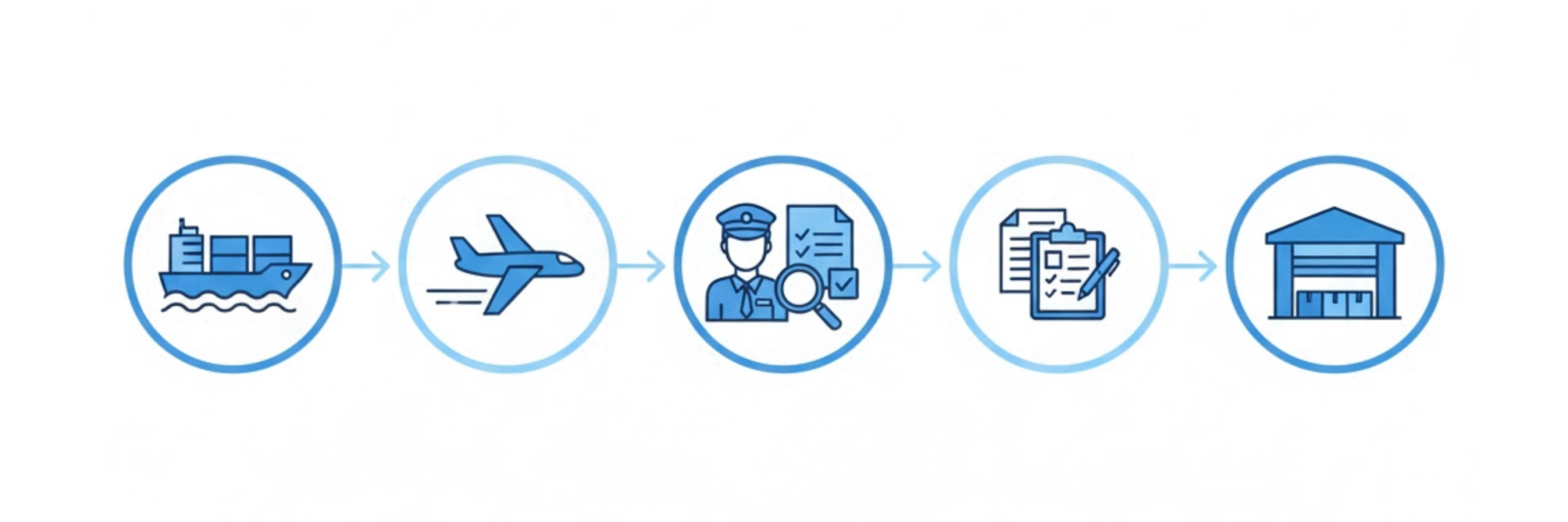
The construction of one import and export process Methodical and effective is the decisive factor to help SME businesses minimize risks, tối ưu chi phí và nâng cao khả năng cạnh tranh trên thị trường quốc tế. To do this, Businesses need to follow clear steps, systematic, From there, a standardized process is formed, suitable for each type of product and specific activities. Below are the basic steps to help businesses build import and export process methodically and effectively.
Determine business model and products
The first step in the construction process import and export process is to clearly define the operating model and business products of the enterprise. This helps identify specific legal requirements, related documents and procedures. Businesses should:
- Classification of goods: normal goods, Goods with special conditions such as cosmetics, medical equipment, food, or other sensitive items.
- Check HS code (Harmonized System Code): This is an international code that helps accurately identify the type of goods, From there, import regulations are determined, Tax rates and related policies.
- Research import policies applicable to products: like Decree 69/2018/ND-CP, Circular 38/2015/TT-BTC, or industry-specific regulations.
- Suggest: Businesses can ask Logistics power Accurate advice on HS codes and related regulations to ensure correct procedures and avoid unnecessary errors.
Planning logistics and choosing appropriate Incoterms
After clearly identifying the item, The next step is to develop an appropriate logistics plan and select delivery conditions (Incoterms) suitable for cost optimization, responsibilities and risks. Specific steps include::
- Analyze risks and costs according to each delivery condition such as FOB, CIF, DDP... so that businesses clearly understand their responsibilities and rights.
- Prioritize choosing Incoterms suitable for SME size to help control costs, Clear responsibilities and convenience in operation.
- Real-life example: Logistics power Guide businesses to use CIF to easily manage first-time imported goods, Minimize the risk of liability and unforeseen costs.
Prepare documents, International documents and checking for common errors
An important step to help ensure the import-export process goes smoothly is to prepare complete documents, Necessary documents according to international standards. Basic documents include::
- Commercial contract (Sales Contract)
- Commercial invoice (Invoice)
- Packing slip (Packing List)
- Bill of lading (B/L or AWB)
- Related licenses such as C/O, C/Q, Import license if there are specific requirements of the item.
During preparation, Businesses often encounter errors such as:: Inconsistent information between Invoices, Packing List and B/L, Missing documents or incorrect forms. To fix it, Logistics power Provide free document checking checklists to help businesses minimize errors, Ensure accurate records, in accordance with international regulations.
Carry out customs procedures quickly
When the documents are fully prepared, The next step is to carry out customs procedures to minimize customs clearance time. The main steps include::
- Prepare electronic customs declarations through the ECUS5 system, VNACCS.
- Flow of goods: green channel, yellow or red, and handle accordingly to avoid delays.
- Submit inspection documents at least 1-2 days before the goods arrive at the port to ensure the customs clearance process takes place quickly..
- Logistics power There is a team specializing in same-day customs clearance, especially for FCL goods and sample goods, helps businesses save time and costs.
Control costs and evaluate effectiveness after each shipment
Final, to continuously improve import and export process, businesses need:
- Accurately record costs incurred in the logistics process such as transportation, storage, customs fees, service fee.
- Apply PDCA method (Plan – Do – Check – Act) to evaluate, Analyze the effectiveness of each shipment, From there, adjust the process, giảm thiểu chi phí và thời gian vận hành.
- Tận dụng dữ liệu từ các đối tác logistics như Logistics power to optimize shipping prices, thời gian và nâng cao hiệu quả quản lý quy trình.
The construction import and export process theo các bước này không chỉ giúp doanh nghiệp SME hạn chế rủi ro, minimizing costs but also creating a solid foundation for scale expansion, improve competitiveness. With the support of experts with experience in import and export such as Logistics power, Businesses can easily set up and operate efficient processes, more professional.
>>>> See more: Experience in Importing Foreign Goods Officially for New Businesses in 2025
Common Mistakes of SME Enterprises in Import and Export
During construction import and export process, Many SME businesses often make serious mistakes, ảnh hưởng đến hiệu quả hoạt động và gây thiệt hại về tài chính lẫn uy tín. Những lỗi này phần lớn bắt nguồn từ thiếu kiến thức rõ ràng, không chuẩn bị kỹ lưỡng hoặc không nắm bắt được các quy định pháp luật liên quan. Below are common mistakes that SME businesses need to avoid to ensure the import-export process goes more smoothly and effectively..
Thiếu hợp đồng vận chuyển rõ ràng và nguy cơ thất lạc hàng
One of the common mistakes of SME businesses when implementing import and export process is the lack of a clear contract of carriage. This leads to many risks, especially lost goods during transportation. When there is no contract or the contract is unclear about responsibilities, The rights of the parties will be easily violated.
Hiểu sai quy định về xuất xứ và bị truy thu thuế
Another common mistake of SME businesses is misunderstanding or not understanding the regulations origin of goods (C/O). This is a major deciding factor in tax rates and import policies, export. If the business does not accurately check the origin code, or do not comply with regulations, có thể gặp phải tình trạng bị truy thu thuế, fine or suspension of customs clearance. Even, in some cases, hàng hóa bị từ chối nhập khẩu do không đáp ứng tiêu chuẩn về xuất xứ, gây thiệt hại lớn về thời gian và chi phí.
Không theo dõi tình trạng tờ khai và manifest
Một sai lầm phổ biến nữa của doanh nghiệp SME trong import and export process là thiếu sự theo dõi sát sao về tình trạng tờ khai hải quan và manifest. Nhiều doanh nghiệp chỉ gửi hồ sơ rồi chờ kết quả, mà không kiểm tra quá trình xử lý của cơ quan hải quan hoặc cập nhật tình trạng hàng hóa.
Những sai lầm này đều xuất phát từ việc thiếu kiến thức hoặc thiếu quy trình rõ ràng trong import and export process of SME enterprises. To avoid these risks, doanh nghiệp cần có sự tư vấn đúng đắn từ các đơn vị uy tín như Logistics power, which provides comprehensive solutions, Help businesses build accurate processes, suitable for each type of goods and industry, thereby minimizing unfortunate errors during the import and export process.
Vai trò của Cường Quốc Logistics trong việc tối ưu hóa quy trình xuất nhập khẩu
One of the important tasks of Logistics power is to provide in-depth consulting services import and export process and import policies suitable for each business industry. Thanks to possessing solid knowledge of legal regulations, mã HS và các chính sách nhập khẩu cụ thể như Nghị định 69/2018/NĐ-CP hay Thông tư 38/2015/TT-BTC, This unit helps businesses clearly identify the necessary steps for goods to be able to circulate legally, quickly pass through border gates and customs procedures.
This is especially important for businesses that are just starting out or do not have much experience in import and export, to avoid common errors, giảm thiểu rủi ro truy thu thuế hoặc bị xử phạt do thiếu hiểu biết về quy định. Logistics power Provides thorough analysis, tư vấn chính xác giúp doanh nghiệp xây dựng quy trình phù hợp, consistent and easy to implement.
Hỗ trợ dịch vụ trọn gói từ xin phép đến giao hàng tận nơi
Don't stop at consulting, Logistics power also provides services Full support during the import and export process. Điều này bao gồm từ việc xin các giấy phép cần thiết, Handling customs procedures, to transport and deliver to your door. The company's professional team helps businesses quickly handle administrative procedures, giảm thiểu thời gian chờ đợi và rủi ro phát sinh trong quá trình vận hành.
Furthermore, thanks to a flexible logistics system, Combine suitable transportation methods, Logistics power Ensuring shipments are always processed in the most optimal way in terms of time and cost. Special, These support services help businesses save significantly on human resources, Minimize errors during procedures, thereby improving the competitiveness of businesses in the international market.
Conclude
In this article, Together we learned the importance of building a standardized import-export process for small and medium-sized enterprises (SME). Model determination, items, Check HS code and import policy, Along with appropriate logistics planning and accurate document preparation are the foundational steps to help businesses minimize risks and optimize costs..
Overall, việc thiết lập quy trình xuất nhập khẩu bài bản, cùng sự đồng hành của Cường Quốc Logistics, will help SMEs save costs, minimize risks, và phát triển thương mại quốc tế một cách bền vững. That's why, Businesses should see this as a necessary step to improve competitiveness and ensure success in import and export activities..
Cuong Quoc Freight Forwarding Company Limited
Office:7th floor, Parami Building, 140 Bach Dang, Tan Son Hoa Ward, Ho Chi Minh City.
Hotline: 0972 66 71 66
Email: info@cql.com.vn
Website: https://cql.com.vn/

See more at