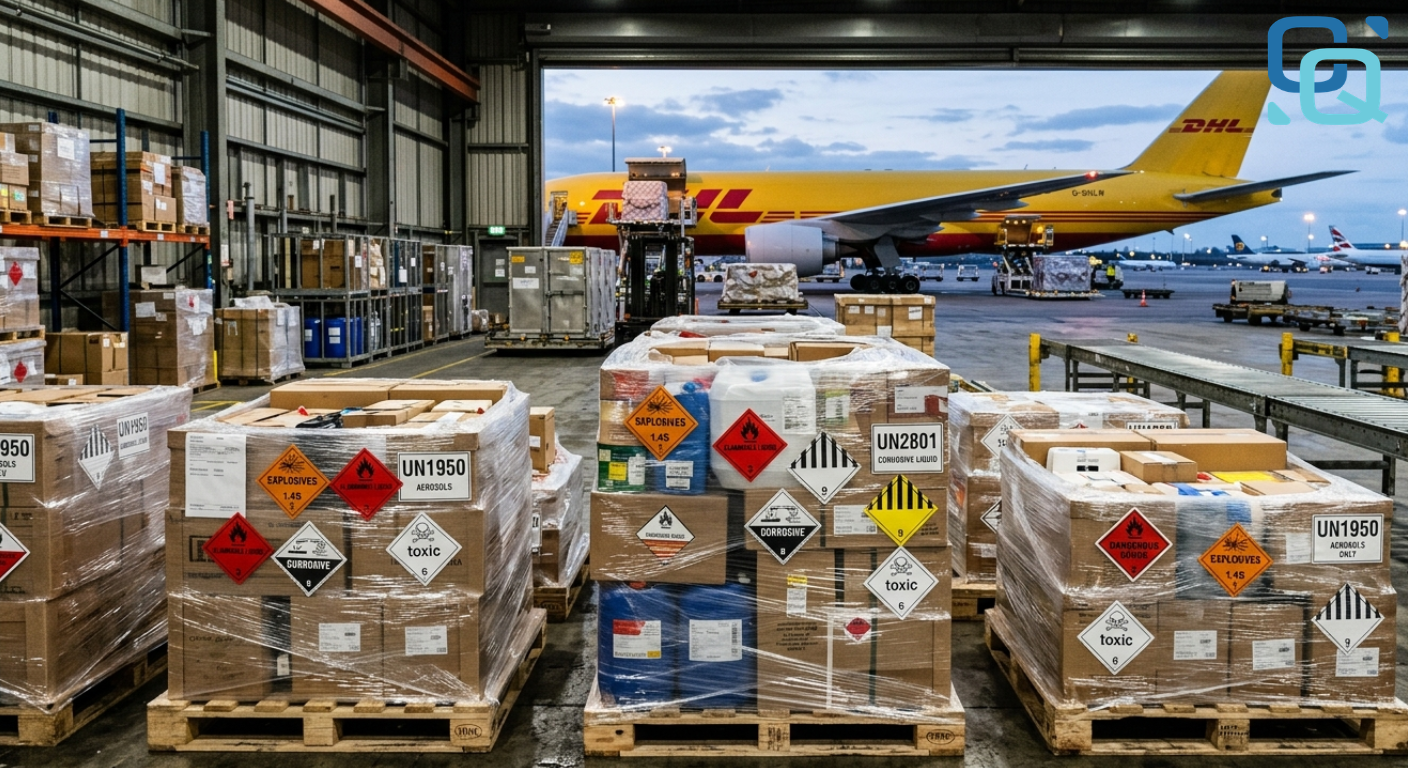
In context import Electronic equipment, computer, Phones and technology products are exploding in Vietnam, Transporting lithium batteries become one of the most important logistics services. Pin lithium (lithium ion/metal batteries) present in almost every imported shipment but are on the dangerous goods list (Dangerous Goods – DG) Class 9 according to aviation regulations. A small mistake in the procedure can lead to rejection of the shipment, Heavy fines or even the risk of fire and explosion on the plane.
In Logistics power – specialized unit import and transporting reputable air cargo in Ho Chi Minh City - we have supported thousands of import-export businesses to overcome these complicated "niches". The article below will provide detailed instructions from A to Z on how to prepare Shipper's Declaration for Dangerous Goods (DGD) and all regulations for transporting lithium batteries, Helps you confidently do the procedure without worrying about being rejected.
Article Content
- 1 The importance of complying with DG Air regulations when transporting lithium batteries
- 2 Legal basis and organization of lithium battery transportation management
- 3 Niche point 1: How to draft Shipper's Declaration for Dangerous Goods (DGD) – The most important documents when transporting lithium batteries
- 4 Niche point 2: Rules for transporting lithium batteries (Class 9) – Most detailed 2026
- 5 Standard DG dossier set at Tan Son Nhat / Noi Bai airport includes::
- 6 Conclude
The importance of complying with DG Air regulations when transporting lithium batteries
Aviation is the fastest method of transportation but also the strictest for dangerous goods. Airplane cargo compartments are subject to drastic pressure changes (from 0,2 to 0,8 atm), Temperatures can drop below -40°C at altitude 10.000m and limited space make any chemical reaction a risk of widespread fire and explosion.
Lithium batteries are the number 1 "enemy" of the cargo hold. Just one short-circuited battery or strong impact can cause a chain reaction (thermal runaway). According to IATA statistics, More than 30% of aircraft DG incidents involve lithium batteries.
The consequences of false or fraudulent declaration are extremely serious:
- Administrative fine from 50 - 200 million VND (according to Decree 100/2021/ND-CP and Vietnam Civil Aviation Law).
- Permanent ban on shipping by shipper and forwarder.
- Criminal legal risks if causing human damage.
That's why, DGR certificate (Dangerous Goods Regulations) is mandatory for every logistics employee to work with Transporting lithium batteries. In Logistics power, The entire team possesses the latest DGR certificate version 2025-2026, Helps customers feel secure when importing.
Legal basis and organization of lithium battery transportation management
The whole process Transporting lithium batteries Aviation is built on three main foundations:
- IATA Dangerous Goods Regulations (DGR) – “The Bible” is updated every year. 67th Edition version (2026) is applying.
- ICAO Technical Instructions for the Safe Transport of Dangerous Goods by Air (Doc 9284).
- Vietnam Civil Aviation Law 2006 (revised 2019) and Circular 20/2021/TT-BGTVT of the Ministry of Transport.
Logistics power Always update immediately any changes from IATA to support customers importing lithium batteries according to the latest regulations.
Niche point 1: How to draft Shipper's Declaration for Dangerous Goods (DGD) – The most important documents when transporting lithium batteries
DGD is the "birth certificate" of the DG shipment, represents the entire legal responsibility of the shipper (shipper). A wrong DGD with just one letter is enough to cause the airline to refuse.
Standard structure of a DGD sheet (according to IATA 2026 form):
- Shipper information & Consignee: Must match 100% with Airway Bill (AWB). Even one comma error will be rejected.
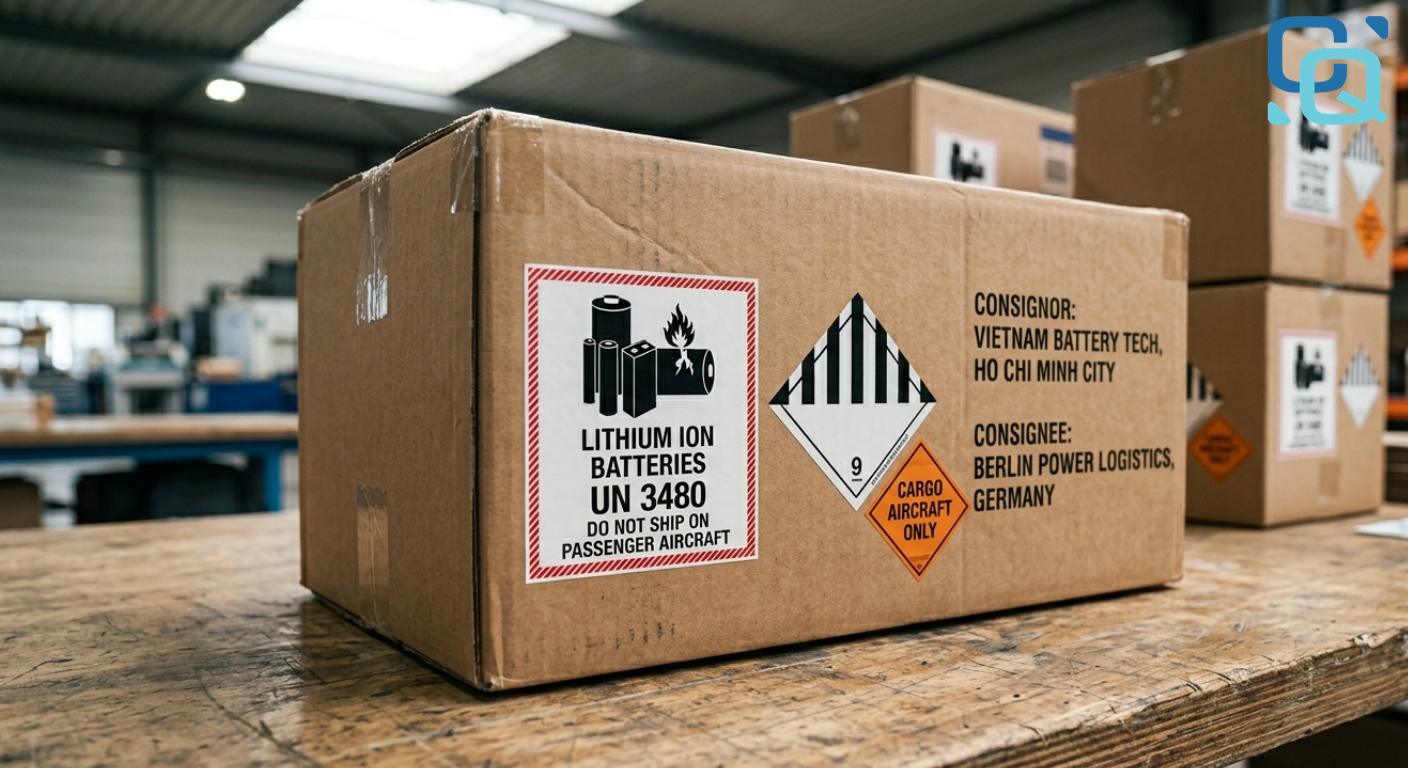
- UN Number & Proper Shipping Name (PSN): For example, removable lithium batteries: “UN 3480 – Lithium ion batteries”. Must be spelled correctly according to column 2 of the DGR.
- Class & Division: Always Class 9 (Miscellaneous dangerous substances and articles).
- Packing Group (PG): Lithium batteries are usually PG II.
- Quantity & packaging type: For example “1 Fiberboard box × 10 kg”. Net Quantity and Gross Weight must be clearly stated.
- Required phrase: “Passenger and Cargo Aircraft” (if below limit) hoặc “Cargo Aircraft Only” (if overtaken).
- Sign & day: The signer must have a valid DGR certificate (It is mandatory to clearly state “DGR Trained Personnel”).
Note the "gold" from Cuong Quoc Logistics:
- Always print 2 originals, red border, wet signature (Do not use electronic signatures).
- DGD must be prepared at least 48 hours before the goods arrive at the airport warehouse.
- For importing lithium batteries from China, Korea, We often prepare bilingual English-Vietnamese DGD for easy testing.
Niche point 2: Rules for transporting lithium batteries (Class 9) – Most detailed 2026
Lithium batteries are classified according to 4 main UN codes:
- UN 3480 / UN 3090: Removable battery (lithium ion / lithium metal batteries).
- UN 3481 / UN 3091: Batteries packaged with the device or pre-installed in the device (batteries packed with / contained in equipment).
The most important Sections (IATA DGR 67th Edition):
- Section IA: Big battery (>100Wh cho ion, >2g for metal) – must follow Packing Instruction 965/968 in full, Shipped by Cargo Aircraft Only.
- Section IB: Average battery (≤100Wh but >2.5kg or equivalent) – limit 2.5kg per package, still need DGD.
- Section II: Small battery (phone, laptop, power bank ≤100Wh) – the simplest procedure, No need for DGD if below limit, But you still have to stick with the Lithium Battery Mark and Class 9 label if it exceeds the threshold.
Require labels & Required packaging:
- Lithium Battery Mark (red border square, Write down UN number + 24/7 emergency phone number).
- Class 9 Hazard Label (if belongs to Section IA/IB).
- Packaging must meet UN Specification Packaging standards and pass a 1.2m drop test (Drop Test).
- The battery must be completely insulated with fireproof material, Do not stack more than 2 layers.
In Logistics power, We provide free lithium battery testing service before import, Ensuring 100% of shipments meet Section II - helping customers save significant costs.
- Procedure for submitting DG documents and Explanation Letter when transporting lithium batteries
Standard DG dossier set at Tan Son Nhat / Noi Bai airport includes::
- DGD (2 originals with red border).
- MSDS/SDS (16 items, English version, updated ≤12 months).
- UN38.3 test report (Required with lithium battery).
- AWB nháp + Invoice + Packing List.
- Import license (if subject to specialized management).
Explanatory letter (If the product has a confusing name such as “dry powder”, “non-hazardous liquid”): We prepare a sample commitment letter "goods not on the DG list" + attach the MSDS as evidence. Logistics power has helped more than 300 imported shipments be exempted from DG inspection thanks to this official dispatch.
- Common mistakes that cause lithium battery shipments to be "Rejected"
Although the regulations are clear, There are still 7 common mistakes:
- Net Weight deviation on DGD (0.1kg difference is also rejected).
- Wrinkled Lithium Battery Mark label, torn or glued on the wrong side (must be on the same side as the address label).
- Use packaging that does not have the UN Specification code for PG II.
- Do not write “Cargo Aircraft Only” when exceeding the Wh limit.
- MSDS is too old (over 12 months).
- The DGD signer does not yet have a DGR certificate.
- Do not test UN38.3 for new lithium batteries.
Conclude
Transporting lithium batteries Aviation is not for those who are impatient or want to "circumvent the rules".. Just a small mistake can cause the imported shipment to be stuck for 7-14 days at the airport, generating storage costs of tens of millions of dong.
Most important advice: Always check the IATA DGR catalog for the latest version because lithium battery regulations change almost every year (specifically limited Wh and Section II).
Cuong Quoc Freight Forwarding Company Limited
Office: 7th floor, Parami Building, 140 Bach Dang, Tan Son Hoa Ward, Ho Chi Minh City
Hotline: 0972 66 71 66
Email: info@cql.com.vn
Website: https://cql.com.vn/

See more at