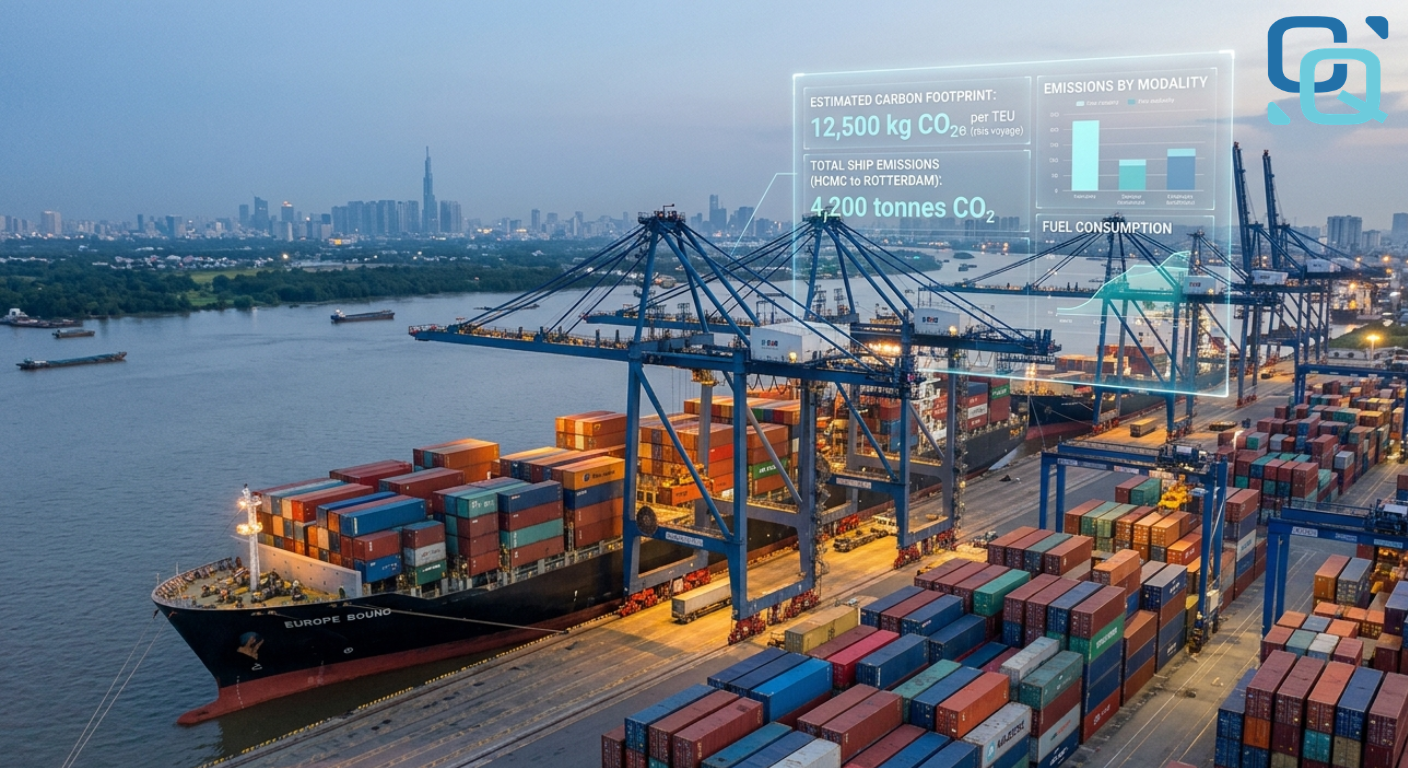
In context Logistics xanh đang trở thành xu hướng tất yếu của ngành logistics toàn cầu, doanh nghiệp Việt Nam xuất khẩu sang EU không thể bỏ qua Carbon Footprint (Carbon Footprint). From 2026, Calculating and reporting carbon emissions for each shipment is no longer an option but has become a legal requirement and a decisive competitive advantage.. With the goal of becoming Logistics power, Vietnam needs to quickly transform from the "lowest cost" to "lowest emissions" model.. This article will provide detailed instructions on how to calculate Carbon Footprint according to international standards, helps export businesses prepare for CBAM and improve their position in the EU market.
Article Content
Why “Carbon Footprint” (Carbon Footprint) is mandatory from 2026?
CBAM mechanism (Carbon Border Adjustment Mechanism) of the EU officially enters the institutional phase from January 1, 2026. This is a "carbon tax barrier" levied directly on imported goods with high emissions. The EU requires EU importers to declare embedded carbon emissions (embedded emissions) of goods and purchase equivalent CBAM certificates. If the non-EU exporter does not provide actual emissions data, Goods will be subject to higher tariffs based on the default value (default values) plus 10% markup in 2026 (gradually increase to 30% by 2028).taxation-customs.ec.europa.euomm.com
Competitive advantage clearly belongs to the business that has it Carbon Footprint short: EU partners will prioritize orders from "green" suppliers to reduce CBAM certification costs and avoid penalty risks. Pioneering businesses Logistics xanh not only retain customers but also enjoy preferential tax rates, even chosen as a long-term strategic supplier.
Logistics xanh marks a major shift: from optimizing "lowest cost" to prioritizing "lowest emissions". If Vietnamese businesses act today, they will turn the CBAM challenge into a golden opportunity to affirm their position Logistics power area.

Legal basis and international regulations
Two international standards are the foundation for all Carbon Footprint calculations:
- ISO 14067:2018: Global standard for product carbon footprint (Carbon Footprint of Products – CFP). It stipulates principles, requirements and guidelines for quantifying emissions throughout the product life cycle, consistent with life cycle assessment (LCA) theo ISO 14040/14044.iso.org
- ISO 14083:2023: Latest standards (Completely replaces European EN 16258), Specify how to calculate and report GHG emissions throughout the entire transportation chain (transport chain operations), including transshipment at port/hub. This standard is based on the GLEC Framework and will be globally recognized from 2023.iso.orgclecat.org
The EU obliges non-bloc suppliers to supply actual emissions data (Actual Data) has been verified by a third party. From 2026, Default data is only temporarily accepted but incurs high markup penalties, forcing businesses to switch to actual measurement immediately.
Niche point 1: Tools and methods to calculate emissions for each mode of transport
Carbon Footprint calculation must follow a standardized formula, Don't rely on feelings.
Popular Software and Tools
- GLEC Framework (Global Logistics Emissions Council): The most standard methodology today for logistics, is the direct foundation of ISO 14083.smartfreightcentre.org
- EcoTransIT World: The most powerful online tool, Supports multimodal computing (sea, air, set, iron), ISO 14083 and GLEC certified.ecotransit.org
- Searoutes & Xeneta: Specialized in marine transportation, help choose ships with EEDI index (Energy Efficiency Design Index) highest.
Basic calculation formula
In there:
- (Emissions): Amount of emissions released (kg CO₂e).
- (Quantity): Cargo volume (ton).
- (Distance): Transport distance (km).
- (Emission Factor): Emission coefficient (kg CO₂e/ton.km), varies by medium, fuel and load factor.
Compare Sea vs Air Same shipment of 10 tons from Ho Chi Minh City to Rotterdam (about 18.000 km):
- Sea route (container vessel): emissions about 10-40 g CO₂e/ton.km → total ~2-7 tons CO₂e.
- Airline: emissions 500-1.000 g CO₂e/ton.km → total up to 90-180 tons CO₂e.
That means aviation is urgently high 20-47 times (even 40-50 times according to some studies) compared to the sea route.inteklogistics.com
For retail goods (LCL): Emissions are divided according to the actual volume ratio per container. Full container goods (FCL) usually have a higher load factor so the Carbon Footprint per unit of product is significantly lower.
Niche point 2: Route optimization strategy to receive certification “Logistics Xanh”
To get a certificate Logistics xanh and optimize ESG indicators, Enterprises perform the following 3 steps:
Step 1: Select Mode of Transport (Modal Shift) Chuyển từ vận tải bộ sang đường thủy nội địa hoặc đường sắt nội địa/Quốc tế (if there is a line) emissions can be reduced by up to 50%.. For example: kết hợp tàu biển + đường sắt Trung Quốc – EU (China Railway Express) instead of the entire road.
Step 2: Choose a carrier (Carrier) Meets Green standards Ưu tiên hãng tàu sử dụng nhiên liệu sinh học (Biofuel), LNG, hoặc tàu trang bị hệ thống thu hồi carbon (Carbon Capture). Kiểm tra chứng chỉ ISO 14001 và báo cáo GLEC/ISO 14083 của carrier. Big companies like Maersk, MSC đang dẫn đầu với tàu methanol và ammonia.
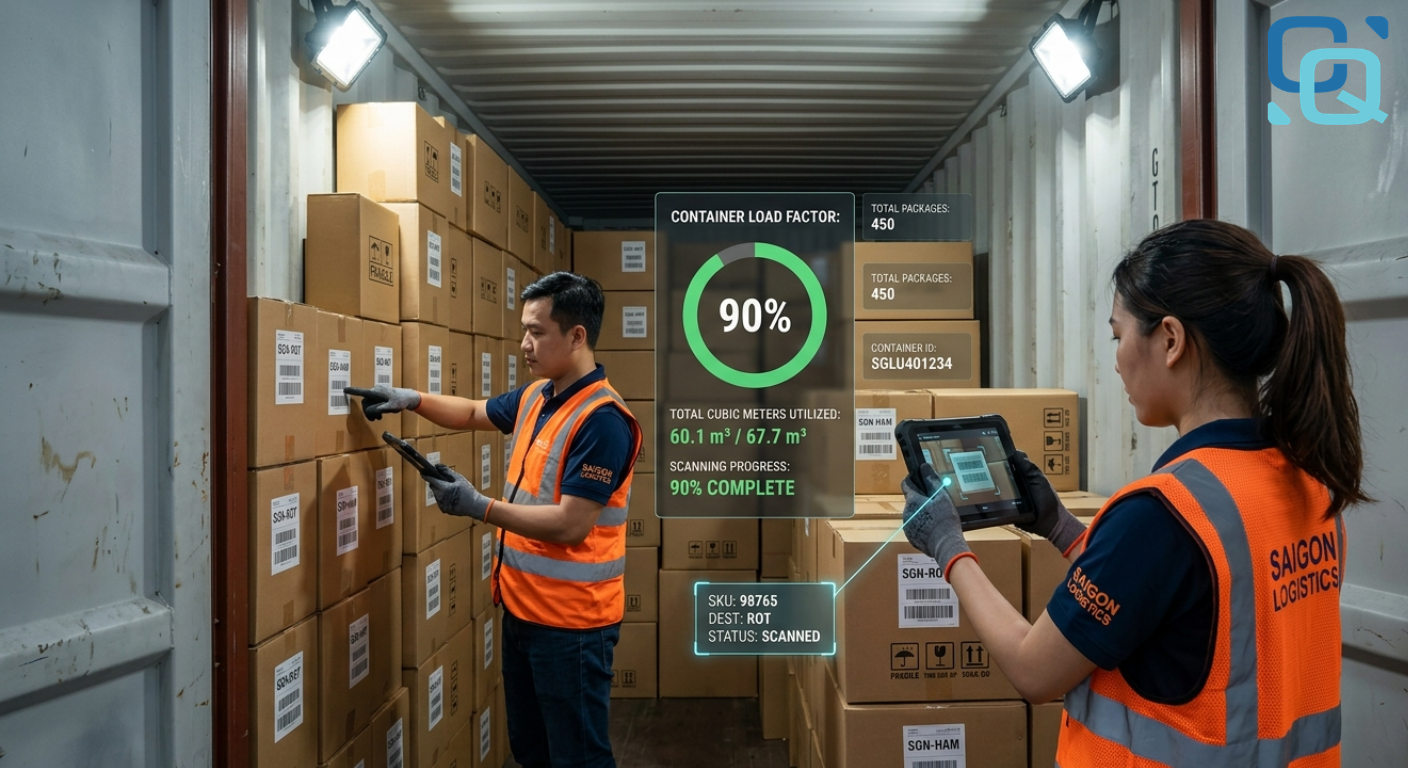
Step 3: Packaging optimization (Packaging Optimization) Reduce packaging weight by 10-20%, tăng tỷ lệ lấp đầy container lên 85-95%. Mỗi 1% tăng load factor có thể giảm Dấu Chân Carbon trên mỗi tấn hàng xuống 1-2%.
Reporting process and official documents for businesses
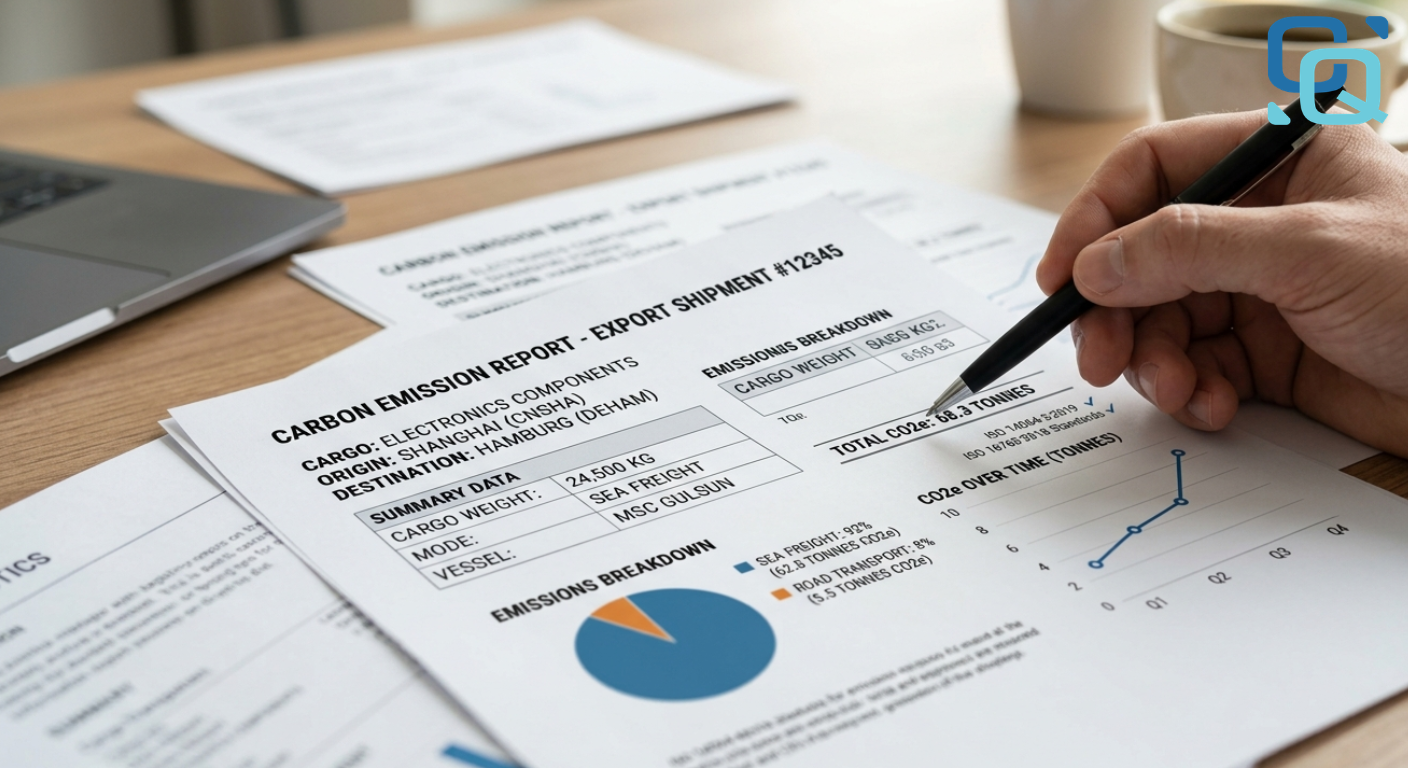
Bộ hồ sơ báo cáo Carbon cho một lô hàng (Carbon Report)
- Emission declaration (Emissions Statement): Issued by forwarder or EcoTransIT/GLEC software, accompanied by detailed calculations according to ISO 14083.
- Documents proving the origin of green fuel (if any): Biofuel Certificate, carbon credits, or LNG fuel purchase contract.
Sample Explanation Letter about the green roadmap (for EU partners) Letters need to be brief, professional:
- Clearly state the measures taken (modal shift, Choose green carrier, Optimized packaging).
- Commitment to the carbon reduction roadmap according to the Net Zero 2050 goal of Vietnam and the EU (Reduce emissions by 55% by 2030).
- Attached is the verified Carbon Report and action plan for the next 3-5 years.
- Notes “Survive” for export businesses
- Avoid “Greenwashing” (Greenwashing): All data must be transparent, verifiable by an independent third party such as SGS, Intertek, TÜV. The EU will strictly inspect from 2026.
- Actual data (Actual Data) vs Default data (Default Data): From 2026, EU gradually reduces acceptance of default values and applies 10-30% markup. Doanh nghiệp phải thu thập dữ liệu hành trình thực tế (actual voyage data) to avoid skyrocketing costs.
- Carbon Cost: Please include the cost of the CBAM tax (about 70-100 EUR/ton CO₂e) Get into the cost calculation right now. Một lô hàng 100 tấn có thể tăng thêm hàng nghìn EUR nếu không tối ưu.
Conclude
Logistics xanh is not only an environmental responsibility but has become a new competitive weapon for Vietnamese businesses in the international arena. With Carbon Footprint accurately calculated according to ISO 14067 and ISO 14083, combines GLEC and EcoTransIT World tools, Exporting businesses will easily overcome CBAM barriers, gain order advantage and contribute to making Vietnam become Logistics power really.
Final advice: Start measuring the Carbon Footprint of every shipment today. Today's data is tomorrow's competitive advantage. Doanh nghiệp nào hành động sớm nhất sẽ dẫn dắt xu hướng Logistics xanh 2026 and following years.
Cuong Quoc Freight Forwarding Company Limited
Office: 7th floor, Parami Building, 140 Bach Dang, Tan Son Hoa Ward, Ho Chi Minh City
Hotline: 0972 66 71 66
Email: info@cql.com.vn
Website: https://cql.com.vn/

See more at